 🔍 Browse
🔍 Browse
🔍 Browse
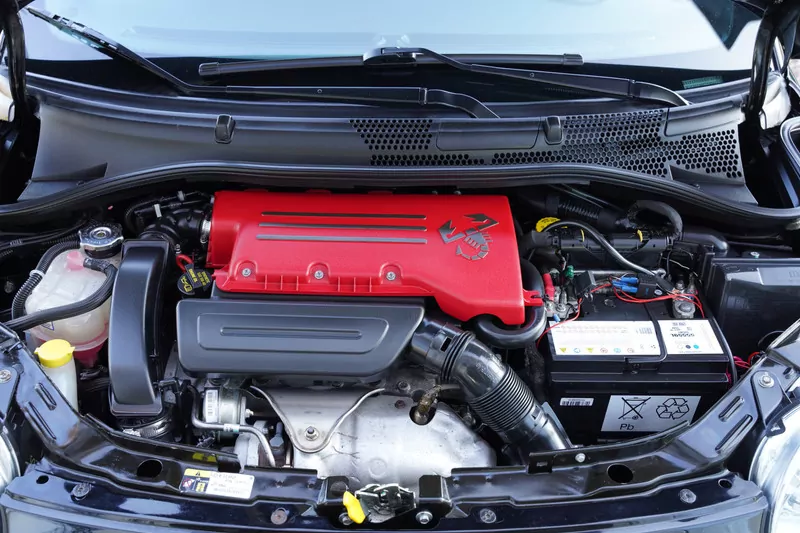
The most powerful standard petrol engine for the early Fiat 500 (2007–2015). With 100 bhp naturally aspirated and 131 Nm of torque, the 1.4 is the driver's choice. Fast enough for motorway ease, economical enough for daily use, and the foundation of all Abarth turbocharged variants.
Search Our Stock ❯The 1.4-litre petrol engine is the most powerful standard engine ever fitted to the Mk3 Fiat 500 (2007–2015). With 100 bhp and a keen power delivery, it represents the sweet spot between the modest 1.2 and the turbo-charged Abarth variants. The 1.4 is faster, more engaging to drive, and more civilised at motorway speeds than the 1.2, yet still returns reasonable fuel economy at 38–43 mpg in real-world mixed driving.
The 1.4 was always a relative rarity in the standard 500 line-up—most buyers chose the 1.2 for its economy, and enthusiasts jumped to the Abarth turbo for serious performance. However, the 1.4 offers a unique middle ground: genuine driving pleasure without forced induction complexity or premium fuel requirements. It is simple, robust, and thoroughly capable for both town driving and sustained motorway cruising.
For buyers seeking a proper petrol engine with genuine punch, uncompromised response, and enough torque to feel responsive in real driving, the 1.4 remains an underrated gem in the 500 engine line-up.
The 1.4 petrol is a naturally aspirated, four-cylinder unit with 1,368 cubic centimetres of displacement. Unlike the Abarth turbocharged variants (which produce 135–180 bhp), the 1.4 NA achieves its 100 bhp and 131 Nm through efficient naturally aspirated combustion and a higher-flowing induction system. There is no turbo lag, no boost uncertainty, and no complexity—just straightforward, linear power delivery across the rev range.
The engine uses port fuel injection and an aluminium cylinder head with 16 valves. Like the 1.2 FIRE, its camshaft is driven by a toothed timing belt. Fiat specifies replacement at least every five years regardless of mileage, or every four years in demanding use. Ask for dated evidence and obtain a current quote for the belt, tensioner and water pump.
Power is delivered in a linear, predictable manner, with peak torque of 131 Nm at 4,250 rpm. The engine needs more revs than a turbocharged unit but offers a clear performance step over the 1.2: Fiat quoted 0–62 mph in 10.5 seconds and a 113 mph maximum speed.
The 0–62 mph acceleration time of 10.5 seconds (vs 12.9 for the 1.2) is a genuine and noticeable improvement. Motorway merging is assured, and in-gear acceleration (e.g., 40–60 mph in 5th gear) is quick without being turbo-dependent. For a small car, the 1.4 offers satisfying performance.
Use the oil grade and Fiat approval stated for the exact model year and follow its time-and-mileage schedule. Do not assume one viscosity or a universal 20,000-mile interval applies to every 1.4. A used car's invoices should show what was used and when.
The 1.4 complies with Euro 4, 5, and 6 emissions standards depending on production year. It features a three-way catalytic converter, oxygen sensors, and a modern fuel management computer. As a naturally aspirated petrol engine, it is simpler than turbocharged engines and has fewer failure modes. No diesel particulate filter (DPF) or turbo wastegate complications exist. Regular-grade petrol (95 RON) is sufficient—premium fuel is not required.
The 1.4 excels in town and suburban environments. The 131 Nm of torque from 3,500 rpm provides snappy response at traffic light launches. The engine is responsive, eager, and genuinely fun to drive in urban stop-start conditions. Compared to the 1.2, the 1.4 feels quicker off the line and more in control during acceleration phases. Steering feedback and direct handling combine with the stronger engine to make town driving genuinely engaging rather than merely functional.
In town driving, expect 36–40 mpg as the engine works harder through repeated acceleration phases. Manual and Dualogic gearboxes handle town driving well, though the manual offers better engagement for those who enjoy driving.
The six-speed manual gives the 1.4 an extra ratio compared with the five-speed 1.2. Motorway refinement and economy still depend on speed, load, tyres and condition, so confirm performance on a proper test drive rather than relying on a fixed real-world figure.
With 100 bhp and Fiat's quoted 10.5-second 0–62 mph time, it has more performance in reserve than the 1.2. Test acceleration through the gears and listen for hesitation, bearing noise or clutch slip.
Fiat's period NEDC combined figure for the manual was 46.3 mpg. Real use can be lower or higher depending on journey type, speed, temperature, load and condition; it should not be labelled as a WLTP result.
For a transparent example, 12,000 miles at 40 imperial mpg uses about 1,364 litres. At £1.50 per litre that is approximately £2,046 a year. Substitute the current pump price and the car's measured mpg using: miles ÷ mpg × 4.54609 × price per litre.
The 1.4 is a naturally aspirated engine without turbo complexity, making it mechanically simpler and generally more refined than turbocharged rivals. At idle, it ticks over smoothly. Under acceleration, engine noise is present but not unpleasant—it is characterful rather than harsh. At motorway cruise, the engine runs quieter and more relaxed than the 1.2 at the same road speed due to lower rpm. For a petrol engine of its era, refinement is respectable.
The 1.4 has a solid reliability record. Key reasons include:
Timing belt: Fiat's handbook states replacement at least every five years regardless of mileage, shortened to four years in demanding use. Check the exact model-year schedule and dated evidence; if it is missing or overdue, obtain an immediate quote for the belt system and associated work.
Head Gasket Longevity: Like the 1.2, the 1.4 can suffer head gasket failure after 100,000+ miles if the cooling system is neglected. White smoke from the exhaust and milky oil are warning signs. Prevention involves regular coolant changes and prompt attention to overheating. Repair costs are £350–600.
Oil Leaks: Minor seeps around the rocker cover gasket and oil pan gasket are occasionally reported, particularly on higher-mileage examples. These are not dangerous but indicate gasket degradation and should be addressed to prevent further oil loss.
Carbon Buildup: Some early examples (2007–2010) have reported carbon deposits on intake valves causing rough running. Modern fuel detergents have largely solved this. Using premium fuel and occasional fuel system cleaning helps prevent buildup on high-mileage cars.
Service cost depends on the schedule and inspection. Ask a Fiat specialist and main dealer for itemised quotes covering the correct oil and filters, brake fluid, spark plugs and any due cambelt, cooling, brake or suspension work.
The 1.4 offers 100 hp versus the 1.2's 69 hp, with Fiat quoting 10.5 seconds rather than 12.9 to 62 mph. Both use toothed timing belts: Fiat's handbook sets a maximum of five years regardless of mileage, shortened to four years in demanding use. Compare measured fuel use, insurance and condition rather than assuming a fixed annual premium.
The 1.0 Mild Hybrid is more economical (50–55 mpg real-world) and adds hybrid efficiency without complexity. However, it is newer with less historical data. The 1.4 offers more raw power, simpler mechanics, and greater driver engagement. The 1.0 is ideal for fuel-conscious buyers; the 1.4 suits enthusiasts.
The standard 1.4 NA and the Abarth turbo versions (135–180 bhp) share the same engine block but differ in turbocharger, intercooler, and fuel mapping. The NA is simpler, more reliable, and requires no premium fuel. The Abarth is faster (0–60 in approximately 7.5 seconds for the 180 bhp version) but more complex, more expensive to maintain, and requires premium fuel. If 100 bhp is sufficient, the NA is the more sensible choice.
The 1.3 MultiJet diesel uses a timing chain rather than the 1.4's belt, but it also has a DPF that needs suitable longer journeys. The right choice depends on condition, history and intended use: the 1.4 avoids diesel after-treatment concerns, while the diesel can suit regular high-mileage driving.
This is critical. Request dated evidence that the timing belt was replaced within Fiat's maximum time limit of five years, or four years in demanding use. If records are missing or overdue, obtain an immediate itemised quote before purchase.
Inspect coolant colour (should be bright, not brown or cloudy). Ask if the coolant has been changed regularly. A neglected cooling system increases head gasket failure risk. If the car has overheating warning light history or white smoke symptoms, walk away unless you budget for head gasket work.
Request full service records showing oil changes at 20,000-mile intervals. Any gaps in servicing suggest neglect. The engine can survive haphazard maintenance, but evidence of regular care is a major green flag for a used purchase.
Start the engine and listen for rough running, ticking, or strange noises. A healthy 1.4 idles smoothly and accelerates sharply. Test motorway acceleration from 50–70 mph—any hesitation or sluggishness suggests fuel system or ignition issues. The engine should feel responsive and eager, not gutless.
Insurance and road tax depend on the exact derivative, driver, first-registration date and recorded CO₂. Pre-April 2017 cars use the current CO₂ band table, while later cars normally pay the standard annual rate. Check the registration and obtain an insurance quote before purchase.
100 bhp of genuine, naturally aspirated performance. The 1.4 is the driver's engine choice.
Search Our Stock ❯