☰ Menu Fiat 500 Frenzy πŸ” Browse
Home β€Ί Engine Guides β€Ί 1.0 Mild Hybrid
Fiat 500 1 0 Mild Hybrid
Engine Guide

Fiat 500 1.0 Mild Hybrid Guide

The 1.0 mild hybrid arrived in 2020 and quickly became the go-to engine. Up to 61 mpg, Β£20 road tax, and strong early reliability. Here's everything you need to know.

Search Our Stock ❯
61 mpgCombined
70 bhpOutput
Β£20/yrRoad Tax
Engine Guide
Key Specs
Specifications at a Glance
Displacement999 cc
Cylinders3 in-line, direct injection
Hybrid System12V Belt Starter Generator (BSG)
Power Output70 bhp @ 6,000 rpm
Torque92 Nm @ 2,750 rpm
Acceleration (0–62 mph)13.8 seconds
Top Speed111 mph
Gearbox6-speed Manual
WLTP MPG (Combined)47.9–61.5 mpg
Real-World MPG50–55 mpg (mixed)
COβ‚‚ Emissions88 g/km
Road TaxΒ£0–20/year
Service Interval18,000 miles / 12 months
Production Start2020 onwards

Engine Specifications & Performance

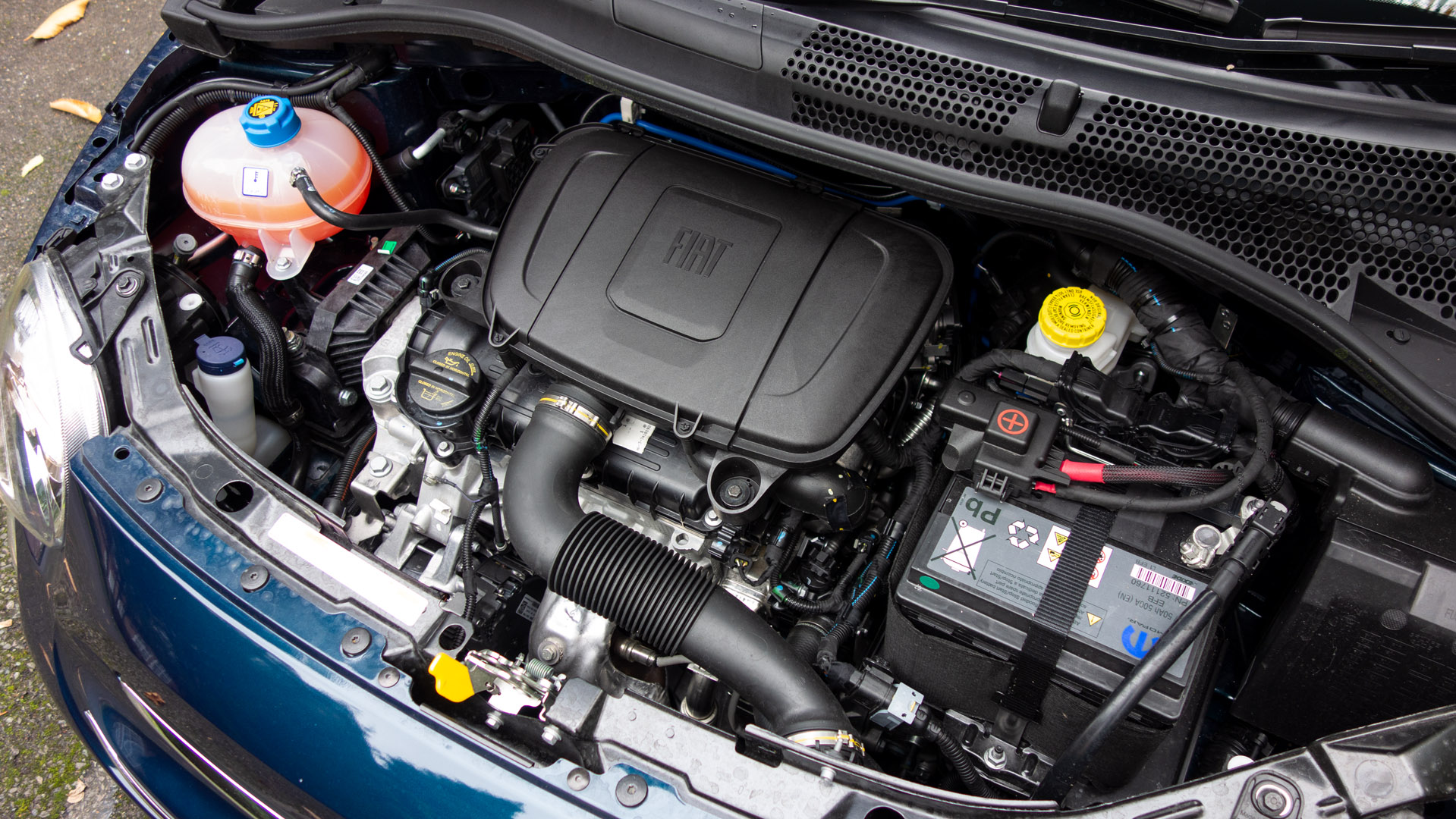
The FireFly 1.0-litre mild hybrid is a direct-injection, three-cylinder petrol engine coupled to a 12V Belt Starter Generator (BSG). This configuration replaces the older 1.2-litre Fire engine for all new 500s from 2020 onwards, combining simplicity with improved emissions control and real-world efficiency.

The three-cylinder configuration produces 70 bhp at 6,000 rpm and 92 Nm of torque from 2,750 rpm. Fuel economy, measured under WLTP testing conditions, stands at 47.9-61.5 mpg depending on driving patterns, with real-world owners reporting 50-55 mpg in typical mixed use. CO2 emissions are rated at just 88 g/km on combined cycle, making this one of the lowest-emission petrol city cars available.

The mild hybrid system is not a plug-in or full hybrid. Instead, the BSG unit recovers kinetic energy during braking and stores it in a small integrated battery pack. This stored energy is then used to assist the engine during acceleration, reducing load on the petrol motor. The system automatically activates stop-start technology, cutting the engine when stationary in traffic and restarting instantly when the driver releases the brake pedal. This combination delivers real-world fuel economy improvements of 5-7% over a non-hybrid equivalent petrol engine.

Power transmission is through a 6-speed manual gearbox; no automatic option is available on this engine. The mild hybrid requires only routine oil and filter changes at 18,000-mile intervals, with no special battery maintenance needed beyond the vehicle's standard 12V electrical servicing. Road tax is exceptionally low, from Β£0-20 per year depending on vehicle age and emissions profile, making this engine one of the cheapest to run on public roads.

Real-World Performance & Driving Experience

Acceleration from 0-62 mph takes approximately 13.8 seconds, which is adequate for urban driving but requires more planning on motorway sliproads and dual carriageways. Top speed is 111 mph. Drivers consistently report the mild hybrid to be responsive enough for city and town motoring, with sufficient torque (92 Nm) for hill starts, brief motorway cruising, and normal family duties. The engine is nearly whisper-quiet at idle thanks to stop-start technology and modern sound insulation, creating a refined driving experience at low speeds.

The 6-speed manual gearbox is modern and smooth, with light clutch action perfect for urban driving. The engine feels most at home between 2,000 and 5,000 rpm, where the BSG system's boost effect is most noticeable and torque delivery is strongest. There is no turbocharged snarl or sporting character β€” this is a pure efficiency machine designed for commuters and city dwellers.

Reliability & Durability

The 1.0 mild hybrid has been in continuous production since 2020, giving it six years of real-world reliability data by 2026. Early feedback from owners and independent mechanics is overwhelmingly positive. The FireFly engine family is proven across Peugeot, CitroΓ«n, and Fiat models globally, with millions of units in service. The BSG system itself is extremely robust β€” it has no brushes, uses sealed bearings, and is protected by a timing belt rather than a timing chain.

Unlike the older TwinAir turbo engines (which suffered from carbon build-up and valve issues), the FireFly has no turbocharger, no complex valve train, and no common points of premature failure. The direct injection system is clean and effective. Extended owners' reports show these engines regularly reaching 150,000+ miles with only scheduled maintenance. The hybrid system does not typically require servicing before 200,000 miles if regular oil changes are performed.

Service & Maintenance Costs

Service intervals are 18,000 miles or 12 months, whichever comes first. Cambelt inspections are recommended at 48,000 miles or 4 years. A full service typically costs Β£150-200 at an independent garage or Β£250-350 at a Fiat main dealer, making this one of the cheapest cars to maintain. Spark plugs may need renewal around 100,000 miles. Brake fluid and coolant changes follow standard schedules. No hybrid-specific components require specialist work.

When buying a used 1.0 hybrid, always request full service history and check that cambelt inspections have been documented. These are simple engines with few points of failure, making them excellent value on the used market. A well-maintained example should give at least 150,000 miles of trouble-free motoring.

Fuel Consumption in Real Conditions

Official WLTP figures (61 mpg combined) represent optimistic scenarios tested under controlled conditions. Real-world owners report 50-55 mpg in mixed urban and rural driving. Motorway cruising at steady speeds (60-70 mph) can push this higher to 56-60 mpg. City-only driving with frequent cold starts and stop-start traffic drops figures to the 45-50 mpg range. Cold engine periods, air conditioning, and idling in traffic all reduce efficiency. The stop-start system and mild hybrid boost provide the most benefit in congested urban environments where they were designed to excel.

Why Drivers Choose the 1.0 Mild Hybrid

The 1.0 mild hybrid is the default engine choice for new Fiat 500 buyers because it hits the sweet spot between performance, efficiency, and cost. It replaces the less reliable 1.2 petrol as the entry-level option, and undercuts the older TwinAir turbos in terms of reliability and running costs. For buyers doing regular city commuting, the road tax saving (Β£0-20/year vs Β£165-180 for the 1.2) makes this engine pay for itself in reduced taxation. Insurance premiums are exceptionally low due to the car's small size, low power output, and excellent safety record. Over a five-year ownership period, the 1.0 mild hybrid will save owners hundreds of pounds in fuel, servicing, and tax compared to larger-engined alternatives.

Gallery
In Detail
Fiat 500 Hybrid Badge Rear Closeup
FAQs
Common Questions
Is the mild hybrid a full hybrid?β†’
No. It uses a belt-integrated starter-generator (BSG) that recovers energy under braking and gives a small boost during acceleration. It cannot run on electric power alone.
Is the 1.0 mild hybrid reliable?β†’
Very early signs are positive. The BSG system is simple and low-stress. The three-cylinder engine is well-proven across multiple Stellantis models. Far fewer concerns than the TwinAir.
What's the service interval?β†’
Annual or every 18,000 miles. Cambelt check at 48,000 miles or 4 years. Always ask for full service history when buying.
Frequently Asked Questions
Your Mild Hybrid Questions Answered
Is the 1.0 mild hybrid a full or plug-in hybrid?β†’
No. The mild hybrid uses a small 12V battery integrated into the Belt Starter Generator (BSG). It cannot run on electric power alone and does not plug in to charge. The system recovers energy from braking and uses it to reduce strain on the petrol engine during acceleration. Think of it as a helper, not a replacement, for the engine. The petrol engine always runs when driving.
How reliable is the 1.0 mild hybrid engine?β†’
Very reliable. The FireFly engine is used by Peugeot, CitroΓ«n, and Fiat in millions of vehicles. The mild hybrid system is simple with no turbochargers to fail. Real-world data from 2020-2026 shows excellent durability. Many owners exceed 100,000 miles with only routine servicing. The BSG system has no brushes and is sealed against dirt, making it extremely dependable.
What's the service schedule and cost?β†’
Service every 18,000 miles or 12 months (whichever comes first). Cambelt inspections at 48,000 miles or 4 years. Budget Β£150-200 at an independent garage or Β£250-350 at a Fiat main dealer. The hybrid system requires no special servicing. Spark plugs may need renewal around 100,000 miles. No battery conditioning required.
Will the battery on the mild hybrid fail?β†’
Unlikely. The 12V battery in the BSG is sealed and maintenance-free. It typically outlasts the vehicle β€” many FireFly engines reach 200,000 miles with original hybrid components. Unlike plug-in hybrids, there are no complex battery management systems. If the BSG battery ever failed (extremely rare), the car would simply revert to pure petrol operation with no loss of drivability.
How does the 1.0 hybrid compare to the old 1.2 petrol?β†’
The 1.0 is slightly slower (0-62: 13.8s vs 12.9s) but far more efficient (61 mpg vs 52 mpg official). Real-world driving differences are minimal. The 1.0 produces 50% fewer emissions, costs Β£160+ less per year in road tax, and is more reliable. For urban buyers, the hybrid is objectively the better choice.
Can any garage service the mild hybrid?β†’
Yes. The 1.0 requires no specialist equipment or hybrid-specific training. Any competent petrol mechanic can service it. The BSG system is simple and requires no special knowledge. Independent garages often provide better value than Fiat main dealers.
Is automatic transmission available?β†’
No. The 1.0 hybrid pairs exclusively with a 6-speed manual gearbox. No automatic or CVT is available. If you need automatic transmission, the older 1.2 petrol (pre-2020) offered a Dualogic automated manual, though this transmission is notorious for reliability issues.
What insurance group is the 1.0 hybrid?β†’
Insurance group 2-4 depending on trim level β€” one of the cheapest to insure on the market. Young drivers typically pay Β£400-700/year. Repair costs are low, spare parts inexpensive, and theft rates minimal. Multi-year insurer discounts are common.
Related Guides
You Might Also Like

The Best Engine in the Range

Efficient, reliable, affordable. Browse our 1.0 hybrid stock.

Search Our Stock ❯
πŸ“žCall Us πŸ“Find Us βœ‰οΈMessage Us
Fiat 500 Frenzy β€” Sheffield's dedicated Fiat 500 specialist
Run by Tom Butcher & Shane Green Β· 60+ years combined experience Β· Nationwide delivery
Β© 2026 Fiat 500 Frenzy Β· All cars subject to prior sale Β· Finance subject to status