 🔍 Browse
🔍 Browse
🔍 Browse
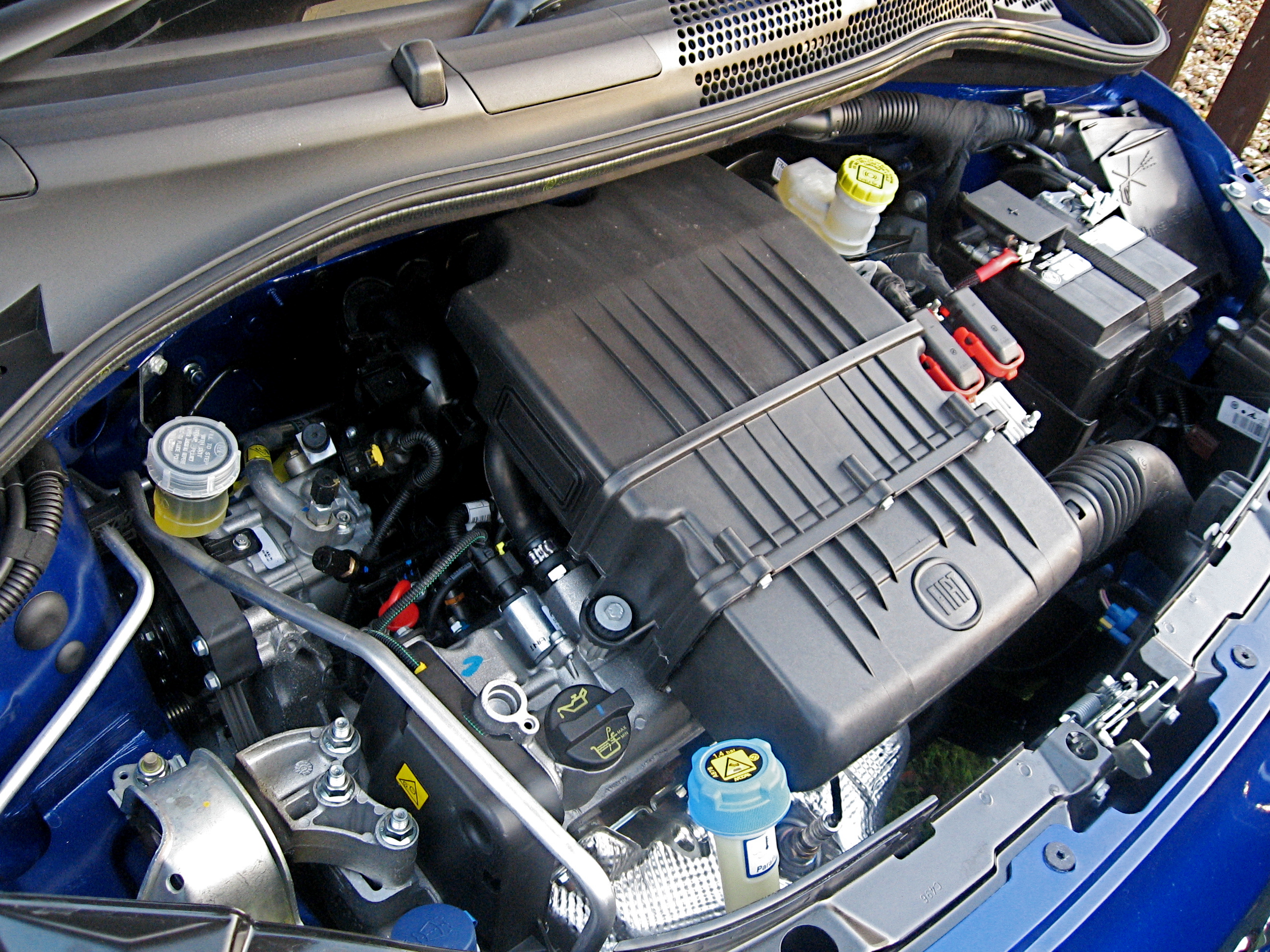
The original and longest-serving Fiat 500 engine. The 1.2-litre four-cylinder petrol has been in the 500 since 2007. It's simple, proven, and cheap to maintain — the workhorse of the range.
Search Our Stock ❯Since its launch in the Mk3 500 (2007), the 1.2-litre Fire engine has been the default choice for Fiat 500 buyers worldwide. With over 17 years of continuous production and millions sold, it represents the middle ground between the newer, more economical 1.0 Mild Hybrid and the performance-focused 1.4 petrol. It is simple, reliable, affordable to maintain, and drives predictably in everyday use.
The 1.2 Fire is simple and well proven, but it uses a toothed timing belt. Fiat's schedule says the belt should be replaced at least every five years regardless of mileage, or every four years in demanding use such as frequent city driving. A used-car buyer should therefore ask for dated evidence of a cambelt change rather than assume it is maintenance-free.
For buyers seeking a straightforward petrol engine with no turbocharger or diesel particulate filter, the 1.2 Fire remains an appealing choice. Its cambelt history, cooling system and routine servicing still need to be checked carefully.
The Fire engine displaces 1,242 cubic centimetres and is configured as a naturally aspirated, four-cylinder unit with in-line four architecture. Fuel is supplied via a modern, multi-point injection system rather than older carburettor designs. The engine produces 69 bhp at 5,500 rpm and 102 Nm of torque from just 3,000 rpm, making it responsive in town driving even if acceleration is leisurely on motorways.
The aluminium cylinder head has 8 valves, two per cylinder, operated by a single overhead camshaft (SOHC). The camshaft is driven by a toothed timing belt. It is a scheduled service item, so age and documentary evidence matter as much as mileage when assessing a used car.
The engine uses a wet sump lubrication system with a replaceable oil filter. Oil capacity is approximately 3.3 litres. The cooling system is liquid-cooled with a thermostat-controlled radiator. Fiat's scheduled servicing is based on 18,000-mile steps, with an annual oil and filter change specified for mainly urban or low-mileage use. The exact oil grade varies by model year, so use the handbook or VIN-specific specification.
The 1.2 Fire complies with Euro 4 through Euro 6 emissions standards depending on the production year. It features multipoint electronic fuel injection, a three-way catalytic converter and oxygen sensors to manage exhaust emissions. There is no diesel particulate filter (DPF), making it better suited than a diesel to repeated short journeys.
The 1.2 Fire excels in town and suburban driving. The 102 Nm of torque arrives at 3,000 rpm, making low-speed response snappy. Traffic light launches are brisk, and the gear ratios are well-chosen for urban stop-start. In a manual, the 5-speed box is easy to use and rarely frustrating. The Dualogic semi-automatic option (available on some years) offers convenience in heavy traffic but is less engaging and slightly less economical than the manual.
Steering is light and direct. The compact dimensions and narrow track mean tight cornering and easy parking. Visibility is excellent. Interior noise is well-controlled for a small car. Ride quality is firm but compliant—the 500's age-old formula of responsive handling and a planted stance suits everyday driving.
This is where the 1.2's modest power becomes apparent. At motorway speeds (70 mph), the engine is turning around 3,200 rpm in top gear. It is capable but works harder than a 1.4 or a turbocharged rival. The 0–62 time of 12.9 seconds is adequate for motorway merging but not quick by modern standards. If you regularly cover long distances at national speed limit, the 1.2 will prove tiring—both in terms of engine stress and noise. The 1.0 Mild Hybrid or the 1.4 petrol are more relaxed at sustained motorway speeds.
Real-world fuel consumption is consistently 45–50 mpg in mixed driving (town, suburban, occasional motorway). The WLTP combined figure of around 50 mpg is achievable but requires smooth driving and favourable conditions. Urban driving yields 40–44 mpg due to lower gear operation and more acceleration cycles. Motorway driving at steady speed can exceed 55 mpg, but motorway driving with overtaking and higher speeds drops to 42–48 mpg.
Consumption changes with temperature, journey length, speed and accessory use. For a transparent example, 12,000 miles at 45 imperial mpg uses about 1,212 litres. At £1.50 per litre that is approximately £1,818 a year. Substitute the current pump price and the car's measured mpg using: miles ÷ mpg × 4.54609 × price per litre.
The 1.2 is not silent. At idle, it ticks over with a characteristic small-car rhythm. Under acceleration, engine noise is audible in the cabin, particularly at high rpm. By modern standards, the 1.2 lacks the refinement of newer turbocharged engines or the 1.0 Mild Hybrid. However, sound insulation is respectable, and the noise is not unpleasant—it simply reveals the engine's character. Dualogic drivers report smoother, quieter operation due to fewer gear changes.
The 1.2 Fire has an excellent reliability record. Key reasons include:
Cooling and Head Gasket Problems: Overheating can damage the head gasket. Warning signs include unexplained coolant loss, persistent white exhaust vapour after warm-up, contaminated oil or repeated overheating. Regular fluid checks and prompt investigation of any temperature or coolant warning reduce the risk.
Oil Leaks: The 1.2 is susceptible to minor oil seeps around the rocker cover gasket and oil pan gasket. These are more annoying than dangerous but should not be ignored, as they indicate gasket degradation. Prevention involves using the correct oil weight and changing oil on schedule.
Carbon Buildup: On early examples (2007–2010), some owners reported carbon deposits on intake valves, causing rough running and hesitation. Modern fuel detergents have largely mitigated this, and using premium fuel helps. Fuel system cleaning is a preventive measure for high-mileage cars.
Dualogic Gearbox Issues: The Dualogic semi-automatic (available on some models) has reported jerky operation, especially when cold. A software update is usually the cure. Manual gearboxes are more robust.
Routine maintenance for a 1.2 Fire is generally straightforward, but the cambelt must be included in the ownership budget. There is no DPF to manage, while brake, suspension, exhaust and electrical components follow normal used-car wear patterns. Actual annual costs depend heavily on age, mileage and condition.
The 1.2 Fire follows these recommended intervals:
The 1.2 Fire is straightforward enough that many competent independent Fiat specialists or general mechanics can service it safely. A full Fiat dealer service costs £180–250; an independent typically charges £100–150 for the same work. If your warranty is expired, an independent saves significant money over time. However, ensure the garage is familiar with Fiat engines and uses the correct oil spec and coolant.
Insurance and road tax depend on the exact derivative, registration date and driver. For 2026/27, many 1.2 cars fall between about £20 and £200 a year in Vehicle Excise Duty: pre-April 2017 cars use their recorded CO₂ band, while later cars normally pay the £200 standard rate. Always check the registration before quoting a figure.
Overall annual running costs (fuel, insurance, tax, maintenance) average £1,500–2,000 for moderate usage. This positions the 1.2 as one of the cheapest cars to run in its class.
The 1.0 is newer and more economical (50–55 mpg real-world). However, it adds complexity (hybrid system, battery) and higher servicing costs. The 1.0 is ideal for high-mileage users and those prioritizing efficiency. The 1.2 is simpler, more responsive in town, and has a longer track record. For buyers wanting proven simplicity, the 1.2 wins; for those wanting cutting-edge economy, the 1.0 edges ahead.
The 1.3 MultiJet diesel can return stronger fuel economy and uses a timing chain, but its DPF makes repeated short journeys a poor fit. The 1.2 uses a scheduled timing belt but has no DPF. Condition, service history and the buyer's driving pattern matter more than a blanket claim that one is always cheaper.
The 1.4 is noticeably faster (0–62 in 10.5 seconds vs 12.9), better at motorway cruising, and more engaging to drive. However, it is less economical (38–43 mpg real-world), more expensive to insure, and uses more fuel overall. The 1.4 suits enthusiasts and motorway drivers; the 1.2 suits town and suburban commuters.
Simple, reliable, and cheap to run. The 1.2 Fire is the most trusted Fiat 500 engine ever made.
Search Our Stock ❯