 🔍 Browse
🔍 Browse
🔍 Browse
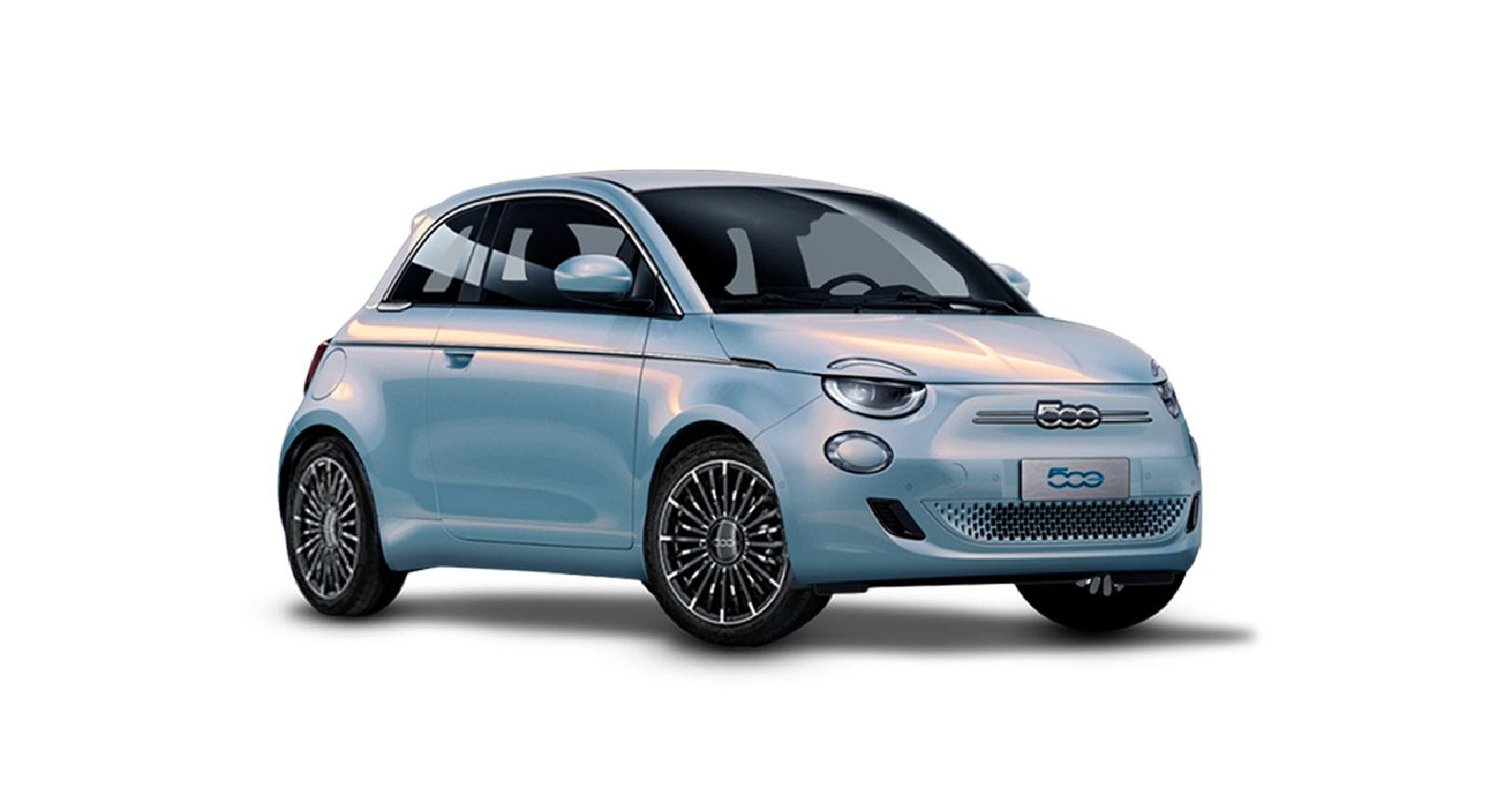
The all-electric Fiat 500 — a complete ground-up redesign launched in 2020. Larger, more premium, and entirely battery-powered. Available with 24kWh (118 miles) or 42kWh (199 miles) battery.
Search Our Stock ❯The Fiat 500e electric (launched 2020) is not an electric version of the classic 500. It's a ground-up redesign on a dedicated EV platform — larger, more modern, and comprehensively updated for 2020s expectations. It's a bold step for Fiat, reimagining their icon for the electric age while maintaining the character and charm that defines the 500 nameplate.
Unlike many electric cars that retrofit batteries into existing platforms, the 500e starts from scratch. Built on a modern EV architecture, it offers genuine interior space, comfort, and technology that the original 500 could never accommodate. Yet it remains unmistakably a 500 — charming, Italian, and emotionally engaging.
The design is evolutionary rather than revolutionary. Fiat has carefully stretched the iconic silhouette into a more practical package without losing the design DNA. The circular headlights, rounded forms, and distinctive proportions remain, but there's added substance and maturity that appeals to buyers who want electric practicality without sacrificing personality.
The 500e is available with 24 kWh and 42 kWh batteries. Fiat's UK figures are 93–95 hp and about 115–118 miles WLTP for the smaller battery, or 118 hp and 186–199 miles for the 42 kWh version, depending on model year.
Real-world range differs from official WLTP figures. The 42kWh model typically achieves 140-170 miles in summer conditions, declining to 100-130 miles in winter (cold batteries lose efficiency). The 24kWh achieves 85-115 miles summer, 65-85 miles winter. For city-only users, the 24kWh is workable; for anyone needing flexibility, the 42kWh is the sensible choice.
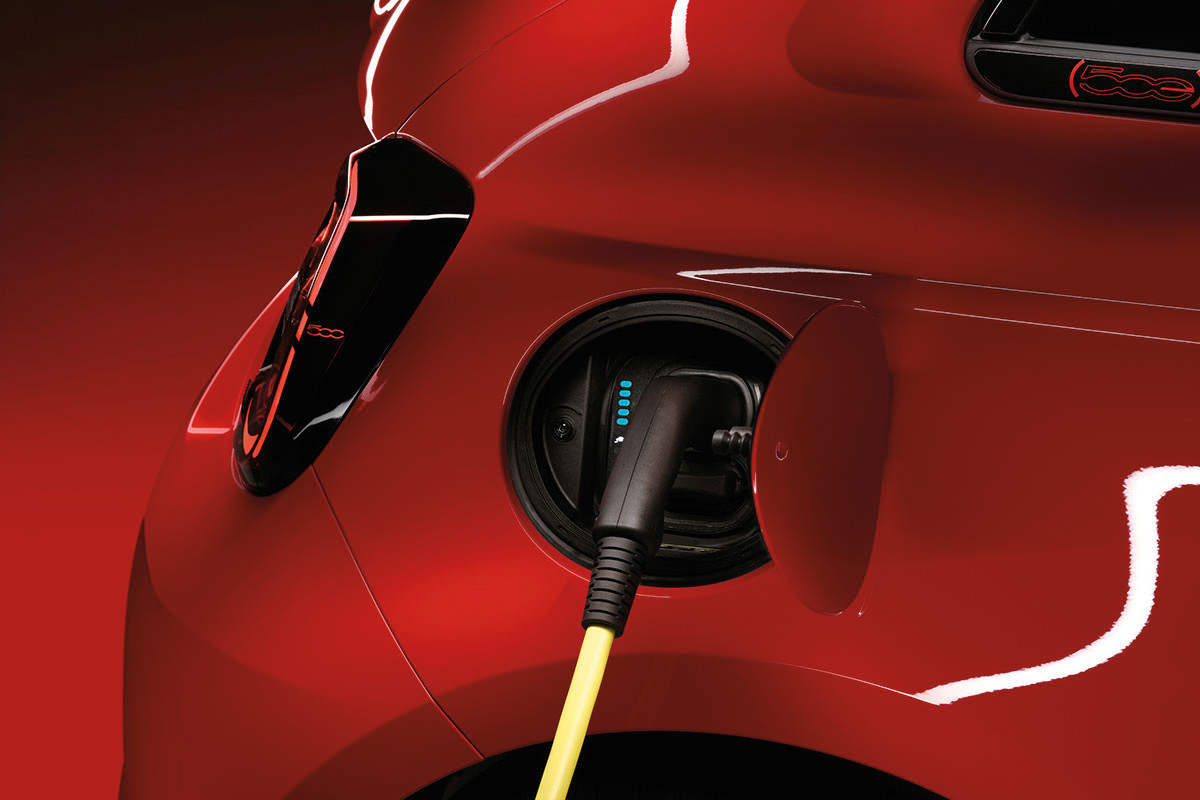
Home charging with a 7kW wallbox is ideal: the 42kWh reaches 100% in approximately 4-5 hours overnight. Standard 3-pin socket charging is possible but slow (roughly 15 hours for 42kWh). On public AC chargers (7-22kW), expect 4-6 hours for a full charge.
Rapid DC charging is where the 500e shines. An 85kW rapid charger takes the 42kWh from 24-80% in roughly 25 minutes — perfect for motorway trips. This charging speed is competitive with mainstream EVs and transforms the 500e from pure urban car to genuine family transport capable of occasional longer journeys.
The 42kWh's 118 bhp delivers respectable performance. Zero-62 acceleration in 9.0 seconds feels brisk in city driving. The electric motor delivers instant maximum torque, making city acceleration feel responsive and engaging. Top speed is deliberately limited to 93 mph — unnecessary for urban use and helpful for range preservation.
The driving experience is fundamentally different from petrol alternatives. The instant torque delivery, seamless single-speed transmission, and near-silent operation create a premium, modern feel. Regenerative braking (where the electric motor captures energy during deceleration) makes one-pedal driving possible — lift off the accelerator and the car intelligently decelerates. It's efficient and addictive once you're acclimated.
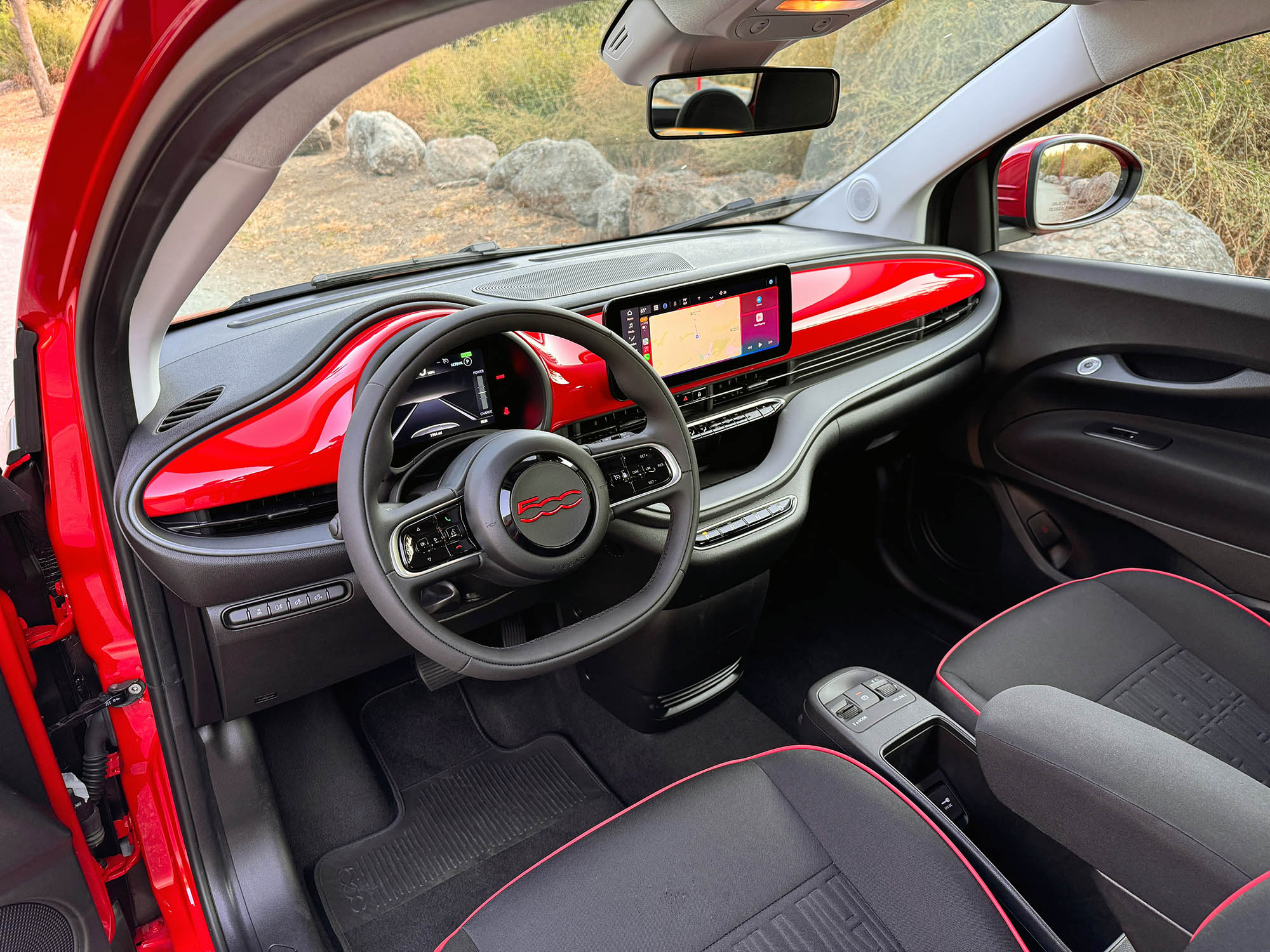
The 500e interior is substantially more modern than the petrol 500. A touchscreen infotainment system with smartphone integration, digital instrument cluster, and climate control are standard. Available features include a larger 10.25-inch touchscreen, premium audio, and ambient lighting. The cabin feels more premium and forward-thinking than the charming but utilitarian petrol 500.
Practical storage and boot space are identical to the petrol 500 (185 litres), though the electric motor takes some underbody space. There's no "frunk" (front trunk) — the space houses the onboard charger and electronics. For city use, space is adequate; long road-trip practicality is limited by range rather than cargo capacity.
New 500e pricing starts around £28,000-£30,000 (depending on battery and trim). Used examples (2020-2024) range from £15,000-£24,000 depending on battery size, mileage, and trim level. For buyers seeking sub-£10,000 used EVs, the 500e is priced higher than bargain city cars but competitive with equivalent-capacity rivals like the Nissan Leaf or Renault Zoe.
The 500e can reduce energy and routine-maintenance costs, especially with suitable home charging, but it is no longer exempt from road tax. For 2026/27, most post-2017 electric cars pay the £200 standard annual VED rate. Electricity, insurance and company-car tax all depend on the current tariff, driver and tax year.
Do not assume a five-year road-tax saving: EVs now pay VED. The 500e still has no engine oil, spark plugs or cambelt, and regenerative braking can reduce friction-brake use, but charging, tyres, insurance and scheduled inspections remain real costs.
For Urban Commuters: The 500e is excellent. Limited range is irrelevant for city use. Home charging overnight is convenient. Running costs are minimal. The driving experience is premium and modern.
For Mixed City + Motorway Driving: The 42kWh is capable but requires planning. Motorway journeys over 150 miles need charging stops. For daily commutes under 60 miles with occasional longer trips, it works well.
For High-Mileage Users: Not ideal. Annual mileage above 15,000 miles makes the 500e less economical than hybrid alternatives, particularly for motorway-heavy use.
For Fleet Users: Potentially attractive where charging and journey patterns fit. Road tax and company-car tax are not zero in 2026/27, so use the current VED and benefit-in-kind rules when calculating the business case.
Boot space (185 litres) is tight for anything beyond shopping. The single-speed transmission is seamless and smooth — better than Dualogic, comparable to premium automatics. There's no frunk. The driving position is upright and comfortable, though rear legroom is modest for taller passengers.
We stock inspected 500e models with full battery health checks.
Search Our Stock ❯