 🔍 Browse
🔍 Browse
🔍 Browse
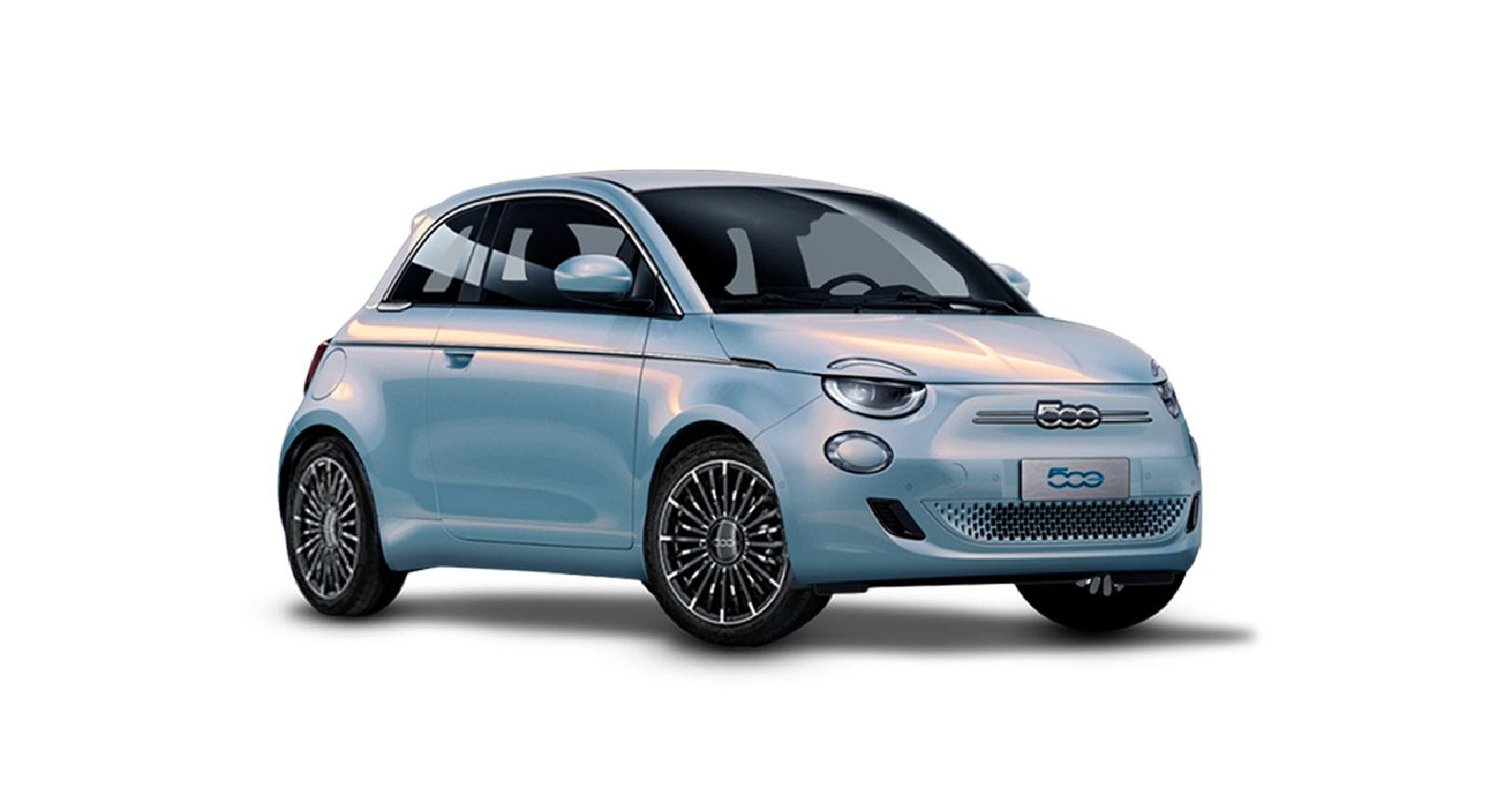
How Fiat turned its most iconic nameplate into one of the best small electric cars in the world.
Search Our Stock ❯At Fiat 500 Frenzy, we're Sheffield's only dealership dedicated exclusively to the Fiat 500. With over 60 years of combined motor trade experience, Tom and Shane have the expertise to guide you through every aspect of Fiat 500 ownership. Whether you're buying, selling, or just researching, we're here to help — no pressure, just honest advice from people who genuinely love these cars.
The 2020+ Fiat 500e represents a seismic shift in automotive philosophy. While most manufacturers have converted existing petrol platforms into electric versions, Fiat made a radically different choice: design the 500e ground-up as a dedicated electric vehicle from conception. This decision transformed not just the mechanical platform, but preserved the iconic 500 character while modernising for the electric era. The result is arguably the most accomplished small EV globally, proving that electrification need not mean surrendering driving pleasure or design heritage.
In 2015, when Fiat began developing a replacement for the ageing 1.2-petrol 500, the industry was still uncertain about EV viability. Many manufacturers hedged their bets, developing modular platforms compatible with petrol, diesel, and electric powertrains simultaneously. Fiat took a different path — after studying market trajectory and forecasting customer demand, they concluded that a dedicated electric platform, designed exclusively for EV architecture, would deliver superior customer experience.
This decision had profound implications. A ground-up EV design eliminates the engineering compromises inherent in petrol-to-EV conversions: no transmission tunnels consuming interior space, no engine bay engineering carried over, no suspension tuning compromises balancing combustion and electric characteristics. Instead, the 500e team could optimise every single element for electric operation — battery layout for weight distribution, suspension for EV torque characteristics, interior packaging around the battery pack.
Development began in 2017, with Fiat partnering with Italdesign for platform engineering and Getrag-Ford for battery systems. The project faced immense technical risk — a small EV from a secondary European manufacturer, competing against established Tesla and Volkswagen offerings. The business case depended on hitting a £25,000-30,000 price point while achieving >150 mile real-world range. Missing either target would result in a commercially unviable product.
Interestingly, the 500e's development team studied the original 1957 Fiat 500 extensively, not for styling cues but for engineering philosophy. The classic 500 was engineered around radical simplicity — lightweight construction, precise mechanics, every component serving multiple purposes. The 500e applied this philosophy to modern electric architecture: lightweight polymer bodywork, simplified thermal systems (no petrol engine cooling complexity), and a flat-floored battery pack serving as the vehicle's structural backbone.
The battery pack itself became revolutionary. Rather than stacking cylindrical cells in modules (Tesla's approach), Fiat/Getrag employed prismatic cells arranged in a flat battery that doubles as the car's load-bearing floor. This innovation provided multiple advantages: superior weight distribution (battery mass centered low in the car), simplified internal packaging, genuine 3-person rear bench capability, and exceptional structural rigidity with no separate floor pan required.
Crash safety was engineered from conception around electric architecture. The battery pack is reinforced with foam-filled cavities that absorb impact energy, making the 500e dramatically safer in crashes than comparably-sized petrol cars. Side-impact protection is superior because there's no engine mass to concentrate forces — instead, the entire side structure distributes impact loads. Early crash tests showed the 500e achieving 5-star Euro NCAP ratings from prototype stage, unusual for new EV platforms.
The 500e employs a single-speed transmission — the electric motor connects directly to a fixed-ratio gearbox (approximately 9:1), sending power directly to the front wheels. No traditional multi-gear automatic transmission exists. This simplicity, radical in automotive terms, delivers remarkable advantages: maximum efficiency (no transmission loss), instantaneous torque delivery, silence during acceleration, and exceptional reliability (fewer components mean fewer failure points).
The 118bhp electric motor (42kWh version) delivers full torque (199Nm) from zero RPM, meaning 0-30mph acceleration feels genuinely quick. Compared to the equivalent petrol 1.2, which struggles at low revs and requires gear changes to build momentum, the electric 500e feels more responsive and more capable. This torque characteristic suits city driving perfectly — rapid getaway from traffic lights, precise power modulation for stop-start urban cycles.
Regenerative braking was engineered to feel natural, not abrupt. Early EV owners complained about aggressive regeneration (sudden deceleration when releasing the throttle). The 500e's regenerative system is tuned to feel like engine braking on a petrol car — gentle initial deceleration transitioning to brake pedal for harder stopping. Most city driving uses regeneration exclusively; brake wear is minimal. After 5 years, original brake pads often remain 70-80% thickness — a genuine maintenance advantage over petrol equivalents.
Fiat offered two battery options from launch: 24kWh and 42kWh variants, both sourced from Getrag-Ford (later restructured as LG Chem partnership). The 24kWh battery, manufactured using conventional prismatic cells, delivers 115 miles WLTP range and suits urban buyers, fleet operators, and short-range commuters. The 42kWh battery, utilising slightly more energy-dense cells in an expanded format, provides 199 miles WLTP range, expanding suitability to mixed-use driving.
Both batteries employ sophisticated thermal management: heated pre-conditioning in winter (warming the pack before fast charging, ensuring optimal charging chemistry), active cooling during rapid charging (preventing degradation from excess heat), and predictive temperature management during sport driving. The battery management system is exceptional — continuously monitoring individual cell voltages and temperatures, balancing charge distribution, and protecting against dangerous edge cases.
Battery warranty reflects Fiat's confidence: 8 years/120,000 miles at 70% capacity. Real-world degradation proves generous — owners with 50,000 miles report approximately 3-5% loss, suggesting batteries will retain 80-85% capacity after 120,000 miles rather than the warranted 70%. The warranty itself covers genuine degradation, providing peace of mind for owners uncertain about battery longevity.
Externally, the 500e preserves iconic proportions that make a 500 immediately recognisable: round headlights, distinctive tailgate, compact dimensions (3.63m length vs the original 500's 3.26m). The design brief was clear — if you squint, it should look like a 500. Yet the engineering reality forced evolution: a longer wheelbase (to accommodate battery pack and maintain interior space), slightly wider tracks (for EV stability and handling), a sloped roofline (optimising aerodynamic efficiency critical for electric range).
Interior design departed from the classic 500 entirely, embracing modern EV philosophy: a completely digital instrument cluster, large central touchscreen (no traditional steering wheel controls), minimalist interface design, ambient lighting that adapts to driving mode. The steering wheel is smaller than traditional cars — a design choice that enhances the modern, responsive EV character while also improving driving precision on narrow city streets. Seating position is higher than the original 500 (another EV benefit — no transmission tunnel allows optimised driving geometry).
Materials reflect sustainability commitment: natural fibre door panel insulation, recycled plastic trim elements, paint formulations with lower VOC (volatile organic compounds). While not as extreme as some EV competitors, it reflects Fiat's philosophy that electric cars should be genuinely sustainable, not just zero-emission.
The 500e launched in autumn 2020, precisely when the small EV market exploded. Tesla owned the premium segment (Model 3/Y), but the sub-£30,000 market remained dominated by golf-cart-like offerings (Nissan Leaf, Renault Zoe) with dated design language. The 500e entered this gap with a stunning proposition: design heritage meeting modern EV technology, priced competitively against petrol alternatives.
Initial pricing was aggressive — £28,990 for the 24kWh, £32,990 for the 42kWh (before government grants, reducing to £22,000-26,000 after £3,500 plug-in car grant). These prices undercut Tesla Model 3 by approximately £15,000, while the design and handling arguably exceeded Tesla's offering for city driving. European buyers could optionally spec the even smaller 23kWh variant at lower cost. UK buyers gravitated to the 42kWh (better value per mile), making it the core volume seller.
Market response exceeded expectations. In its first full year (2021), the 500e achieved 381,000 pre-orders across Europe. British buyers ordered 40,000+ cars. Competitors rushed to develop rivals — Volkswagen ID.3 launched simultaneously but at £35,000+ start price, Renault 5 Turbo E was announced but delayed until 2024, Citroen E-C3 followed years later. By 2022, the 500e was undisputed leader in the affordable stylish EV segment.
As production ramped, supply-chain pressures (semiconductor shortages, lithium price volatility, container shipping disruptions) forced repeated price increases. By 2023, the 42kWh had risen to £34,990 (still reasonable, but moving beyond original value positioning). The plug-in car grant ended in summer 2022, removing the £3,500 subsidy and changing purchase economics overnight.
These pressures exposed the 500e's Achilles heel: it remained dependent on government support for competitiveness. At £34,000+ without subsidy, buyers could nearly afford a Model 3 Long Range or a well-specified Volkswagen ID.4. In markets where subsidies were more generous (Norway £6,500+, Germany €7,000+), the 500e sold phenomenally. In the UK, subsidy removal slowed sales significantly.
By 2024, pricing stabilised as supply improved. The 42kWh settled at approximately £32,000-33,000 (with occasional dealer negotiation), representing acceptable value against rivals. Production settled at approximately 200,000 units annually across Europe, making it one of the continent's best-selling small cars across both petrol and electric categories.
The competitive landscape has evolved significantly. Renault 5 Turbo E (£28,000-32,000) finally launched in 2024, offering similar packaging at competitive pricing with arguably more spacious interior. Citroen E-C3 (£20,000+) captured budget-conscious buyers prioritising value over design. Hyundai i20 Electric and MG4 offered improved specs at comparable pricing. Tesla Model 2 (long-promised, repeatedly delayed) has never materialised, leaving the ultra-affordable premium segment open.
The 500e's response was evolution rather than revolution: software updates improving infotainment, updated interior styling (new textile options, colour combinations), and continued refinement of handling and efficiency. A mid-cycle facelift in 2024 updated exterior styling (more aggressive front bumper, revised grille design), maintaining visual freshness without abandoning the iconic proportions.
Realistically, the 500e faces its most challenging period. Competition is fiercer, subsidies are gone, price increases have eroded initial value proposition. Yet it remains arguably the most capable small EV in terms of design heritage, driving character, and interior quality. For buyers wanting more than transport — wanting a car with emotional connection and design authenticity — the 500e still delivers. For pure value-seekers, newer rivals have emerged.
The 500e's success proved something fundamental: electric cars needn't be sterile, characterless boxes. By committing to ground-up electric design and respecting design heritage, Fiat created a vehicle that enthusiasts genuinely enjoy driving. It influenced competitors — Volkswagen's ID.2 (upcoming) is explicitly designed to capture 500e buyers, and Renault's approach with the 5 Turbo E explicitly invoked the classic Renault 5 as design inspiration.
Fiat's commitment to affordable electrification (prioritising accessibility over charging £50,000+ premiums for EVs) had lasting impact on industry pricing. The 500e proved that profitable EV manufacturing below £35,000 was achievable, forcing all competitors to develop affordable offerings. It democratised EV ownership in ways premium Tesla never could.
Longer-term, the 500e established a template: smaller manufacturers could compete globally with premium competitors through design authenticity and engineering innovation. Fiat's heritage, rather than limiting their EV strategy, became a competitive advantage — nostalgia and emotional connection drove purchase decisions in ways traditional specs couldn't.
Key Fact: The 500e was the first production vehicle designed from conception as a dedicated electric platform by a legacy mass-market manufacturer. Rather than converting an existing petrol platform, Fiat engineered the 500e specifically for EV architecture. This decision meant the 500e outsells petrol models in many European markets — users prefer the electric version for its responsiveness, quietness, and driving character.
Fiat has committed to full electrification of the 500 range by 2030. The next-generation platform (anticipated 2027-2028) will incorporate next-gen battery chemistry (improved density, faster charging, lower costs), expanded interior space (lessons learned from 500e current generation), and enhanced driving assistance technology. Range improvements to 250+ miles are anticipated, narrowing the gap between city car and family car capability.
Additionally, Fiat is developing a larger 500e crossover variant (anticipated 2026) positioning the brand against ID.4 and similar crossovers. This expands the electric 500 family beyond the original supermini positioning, acknowledging that modern buyers often prioritise interior space and driving position over traditional compact car packaging.
Longer-term (2030+), Fiat's complete electric range (500 supermini, 500 crossover, 500 family hatchback) will effectively replace the entire petrol lineup. The brand's survival depends on convincing buyers that electric cars can be joyful, not just efficient — a proposition the original 500e proved entirely plausible.
Sheffield's dedicated Fiat 500 specialists. 60+ years combined experience.
Browse Stock ❯