 🔍 Browse
🔍 Browse
🔍 Browse
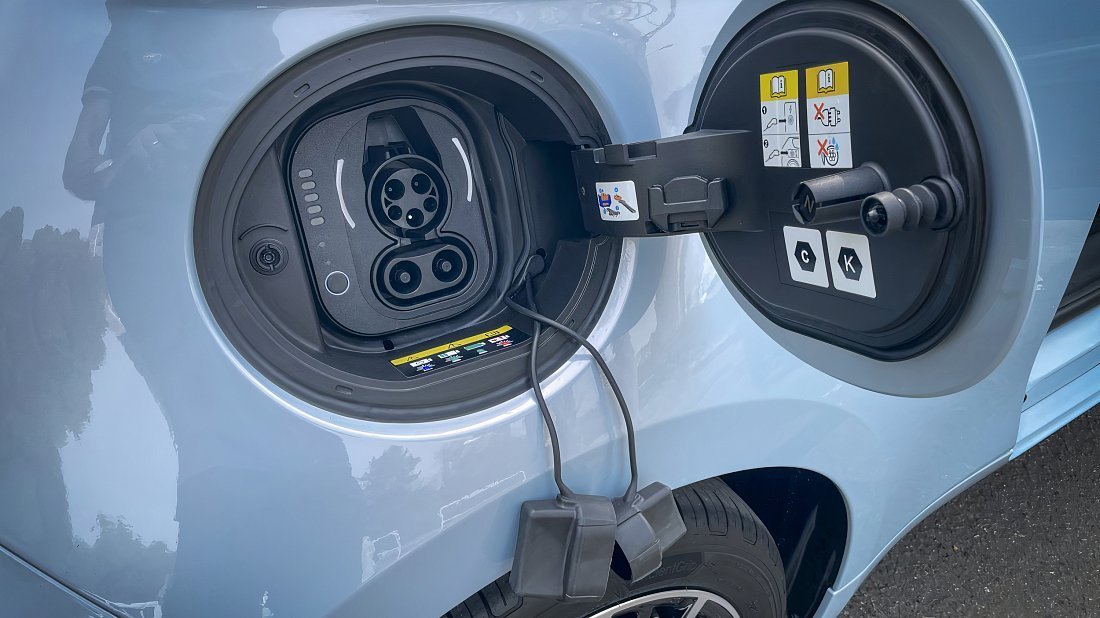
Home charging, public charging, rapid charging — everything 500e owners need to know about keeping their car topped up.
Search Our Stock ❯At Fiat 500 Frenzy, we're Sheffield's only dealership dedicated exclusively to the Fiat 500. With over 60 years of combined motor trade experience, Tom and Shane have the expertise to guide you through every aspect of Fiat 500 ownership. Whether you're buying, selling, or just researching, we're here to help — no pressure, just honest advice from people who genuinely love these cars.
Charging an electric Fiat 500e is straightforward once you understand your options. Unlike refuelling a petrol car, you have multiple charging methods depending on your location, available time, and daily driving needs. This guide covers everything from home charging installation to public rapid charging networks, helping you develop a charging strategy that works for your lifestyle.
For most 500e owners, home charging forms the backbone of their charging routine. Installing a dedicated home charger transforms ownership convenience — you start each morning with a full battery, eliminating range anxiety for daily commutes. The standard 7kW home wallbox is the practical choice for UK owners, delivering 4-5 hours for a full charge on the 42kWh battery (0-100%).
A 7kW home charger requires a dedicated 32A circuit with appropriate wiring (typically 10mm² cable). Installation costs typically range from £400-600, though you may qualify for OZEV government grants which have historically covered 75% of costs (though schemes have now ended, some suppliers offer alternative financing). The actual charging process is automatic — plug in when you arrive home, and the car manages the charging rate based on battery temperature and state of charge.
Real-world home charging times vary slightly: the 24kWh battery charges fully in approximately 3 hours on a 7kW charger, making it suitable only for light daily driving (under 50 miles). The 42kWh battery reaches 80% charge in around 3.5 hours, with the final 20% taking longer due to tapering. Most owners charge only to 80% overnight unless they need full capacity for a longer journey, extending battery longevity.
Destination chargers (typically 3-7kW units) are increasingly common at shopping centres, workplaces, and leisure facilities. These slower chargers provide "top-up" charging rather than full replenishment — a 3-4 hour supermarket visit adds 20-30 miles to your range, which is often sufficient for combined shopping and evening driving. Many are free to use, making them valuable for extending range during longer journeys.
Several networks operate destination chargers across the UK. Instacharge, for example, has units at numerous supermarkets and car parks. BP Pulse (formerly Polar) operates a comprehensive network of destination chargers alongside rapid chargers. Pod Point provides workplace charging solutions for fleet operators. Most destination chargers are app-controlled, requiring registration with the relevant network before use.
Realistically, destination charging adds 5-10 miles per hour of charging at 3kW power, or 10-15 miles per hour at 7kW. For the 42kWh 500e, a full 7-hour destination charge adds approximately 100 miles of range, equivalent to a top-up rather than a complete refill. Destination charging is most useful when combined with home charging — it bridges the gap between daily commuting and longer weekend journeys.
This is where the 500e truly shines for longer trips. The 85kW rapid DC charger delivers remarkable speed: 24-80% charge in approximately 25 minutes for the 42kWh battery, covering 120 miles of range. This transforms the 500e from a city car into a practical motorway companion, enabling 200-250 mile journeys with a single 25-minute charging stop.
Rapid charging uses DC (direct current) power delivered directly to the battery, bypassing the car's onboard charger. This high-power delivery requires careful thermal management — the 500e actively cools the battery pack during rapid charging to prevent degradation. The charging curve is non-linear: 0-80% takes approximately 25 minutes, but 80-100% slows dramatically (to protect battery health), taking an additional 10-15 minutes. Most owners simply charge to 80% and move on, making the 25-minute figure accurate for practical use.
DC rapid charging networks are operated by various providers: InstaVolt offers ultra-rapid (150kW+) chargers at motorway service stations and retail parks, though these deliver 85kW to the 500e; BP Pulse Rapid network provides 50kW chargers widely across major routes; Pod Point Rapid offers 50-100kW chargers; Geniepoint operates rapid chargers at petrol station locations. Most networks charge by kWh consumed (around 40-50p per kWh), making a rapid charge cost approximately £15-20.
Multiple networks operate in the UK, though they're increasingly integrated through payment apps. Most networks now allow contactless credit card payment in addition to app-based access, removing the need for multiple memberships. Zap-Map is the essential app for UK EV owners — it maps all charging points nationwide, provides real-time availability, displays pricing, and integrates with most payment methods.
Major networks include BP Pulse (the largest UK network with 7,000+ chargers), InstaVolt (rapidly expanding ultra-rapid infrastructure), Pod Point (strong workplace/destination presence), GeniePoint (petrol station integration), and ChargePlace Scotland (free network in Scotland). Most rapid chargers are concentrated on motorway corridors (M1, M4, M6, M25) and major towns. Rural areas have sparser coverage, making longer journeys outside established corridors more challenging.
Network reliability varies. InstaVolt chargers are typically newer with 95%+ uptime, while older networks occasionally experience downtime. Most networks allow you to report faults immediately through their apps, and increasingly offer alternative chargers within the network if your chosen unit malfunctions. Planning journeys using Zap-Map, which updates availability in real-time, is essential to avoid arriving at a broken charger.
Effective ownership depends on matching charging infrastructure to your driving patterns. Daily commuters under 40 miles each way only need home charging — a 7kW charger delivers 50+ miles range overnight, more than sufficient for typical commuting. These owners use destination charging occasionally for convenience, never requiring rapid chargers.
Commuters with 40-80 mile daily distances benefit from home charging plus one destination charge during the day. The 42kWh battery provides 140-170 miles real-world summer range, covering the round trip with some reserve. On winter days when range drops to 100-130 miles, a quick midday charge-up becomes essential.
Owners needing regular 150+ mile journeys should plan for rapid charging infrastructure on their routes. The 500e is genuinely capable on motorway commutes when rapid charging is integrated into the journey plan — a 200 mile commute requires one 25-minute charging stop, ultimately faster than traditional refuelling when you factor in drive time reduction and lower running costs.
Realistic expectations matter: the 500e is not a long-haul car in the traditional sense. 300+ mile journeys require multiple charging stops. The 24kWh model is genuinely impractical for anything beyond 60-70 mile daily driving without regular destination charging. The 42kWh model transforms longer journeys into practical propositions, but planning and preparation (using Zap-Map, identifying charger locations, building in charging stops) is essential.
Electricity costs depend on your source. Home charging on a standard domestic tariff costs approximately 25-30p per kWh, making a full 42kWh charge cost £10-12.60. Dedicated EV tariffs (Economy 7, Octopus Go) reduce this to 12-20p per kWh overnight, costing £5-8.40 for a full charge. This translates to approximately 2-4p per mile, compared to 10-12p per mile for a petrol equivalent (at £1.50/litre).
Public rapid charging costs 40-60p per kWh at most networks, making a 25 minute (25-30kWh) rapid charge cost £10-18. While seemingly expensive per kWh, this is still £15-20 for 150 miles of range, competitive with petrol alternatives for occasional long-distance driving. Subscription schemes from networks like BP Pulse offer discounts for frequent users (monthly fees of £5-15 reducing per-kWh rates).
Use miles ÷ measured miles/kWh × price per kWh. For example, 12,000 miles at 4 miles/kWh uses 3,000 kWh: that is £240 at 8p/kWh, £750 at 25p/kWh or £2,370 at 79p/kWh. These are arithmetic examples, not tariff quotes. Compare them with petrol using miles ÷ imperial mpg × 4.54609 × price per litre.
Lithium battery degradation is inevitable but manageable. Fiat 500e batteries are warrantied for 8 years/120,000 miles at 70% capacity, meaning you can expect approximately 20-25% degradation over typical ownership. Real-world usage shows much slower degradation — most owners report 3-5% annual loss, stabilising around 5-7% loss annually after year 3.
Charging practices affect longevity. Frequent rapid charging generates heat, accelerating degradation. However, the 500e's thermal management system mitigates this — strategic rapid charging (once weekly for longer journeys) has minimal impact compared to daily rapid charging. Home charging to 80% and occasional rapid charging represents the optimal strategy for battery longevity.
Cold temperatures accelerate degradation and reduce available capacity. Winter charging is less efficient than summer charging — the same charge delivers slightly less final capacity due to battery thermal losses. Real-world winter range (100-130 miles for 42kWh) reflects both reduced efficiency and reduced available capacity at low temperatures. Allowing the battery to warm during winter driving gradually restores available capacity.
Home charging fails when the circuit breaker trips — this indicates an electrical fault requiring a qualified electrician before attempting further charging. Never attempt to override breakers or use higher-amp circuits than intended. Similarly, if home charging takes significantly longer than expected (over 6 hours for a full charge), the charger likely has a fault requiring replacement.
Rapid chargers sometimes fail to communicate with the vehicle, preventing charging initiation. Solution: turn the car completely off (not just the ignition), wait 30 seconds, restart, and try again. If rapid chargers repeatedly reject your car, contact the network's support line — your vehicle may have a temporary communication fault resolvable via a software update at a Fiat dealership.
Range appearing lower than expected after charging can indicate ambient temperature effects (cold reduces range perception), driving style changes (motorway driving uses more energy than city driving), or genuine battery degradation. Checking battery health via the infotainment system (normally 85-95% capacity after year 1, declining to 75-80% after 5 years) confirms whether degradation is present or whether range loss reflects external factors.
Key Fact: The 500e's 85kW rapid charging capability makes it genuinely practical for occasional 150-200 mile journeys. A single 25-minute rapid charging stop provides 120 miles of range, transforming it from a city car into a versatile commuter. Combined with home charging, this makes the 500e suitable for far more varied driving patterns than its size might suggest.
Infrastructure is rapidly improving. New rapid chargers are deployed monthly, and reliability improves as networks mature. The next 2-3 years will see significant expansion, particularly on secondary routes outside major motorway corridors. Subscription schemes will likely become more sophisticated, potentially offering fixed monthly costs with unlimited rapid charging (similar to traditional fuel cards).
By 2026-2027, charging speed is increasing rapidly — 150kW chargers becoming standard, with 200kW+ chargers appearing. The 500e's existing 85kW limitation means it won't benefit directly from these improvements, but as a used car market grows, lower hourly charging costs and wider network availability will improve ownership economics significantly.
Sheffield's dedicated Fiat 500 specialists. 60+ years combined experience.
Browse Stock ❯