 🔍 Browse
🔍 Browse
🔍 Browse
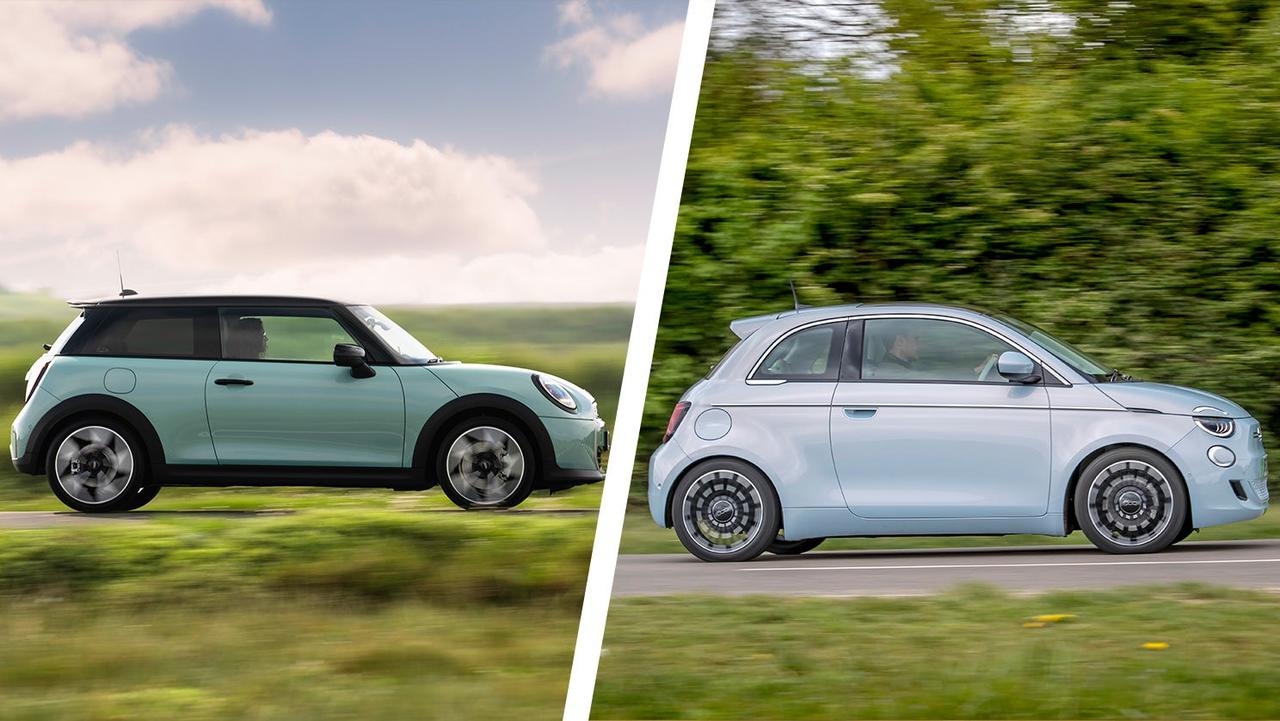
The two most iconic small cars compared. Running costs, reliability, insurance, depreciation, and which one suits your lifestyle better.
Search Our Stock ❯Two iconic city cars, two distinctly different philosophies. The Fiat 500 is pure Italian charm — pocket-sized, light on its feet, and designed for navigating cramped urban streets. The MINI Cooper is British engineering meets automotive nostalgia, offering more space, more power, and more premium interior appointments. But which is right for you?
This isn't just about aesthetics. There are substantial differences in size, performance, running costs, and what you'll actually experience day-to-day. We've compared real specifications, ownership data, and real-world figures to help you make an informed decision.
The Fiat 500 is small. At 3.546 metres long, it's genuinely pocket-sized — ideal for city living and tight parking spaces. The MINI Cooper is noticeably larger at 3.821 metres. That's 275mm difference, which might not sound like much, but it makes a difference when threading through congested streets.
Where this matters most is cargo. The Fiat 500 offers 185 litres of boot space. It's tight, but workable for shopping and weekend bags. The MINI Cooper delivers 211 litres — roughly 12% more. For anything larger than grocery runs, the MINI gives you more flexibility. If boot space is critical, this is a point in MINI's favour.
Interior space follows a similar pattern. The 500 is intimate; you sit close to the steering wheel and the windscreen feels expansive. The MINI offers more elbow room, wider seats, and a more spacious cabin overall. Taller drivers (over 6 feet) will find the 500 tighter, though not impossible.
The legacy Fiat 500 is not a performance car. Fiat quotes a 104 mph maximum for the 2020-era 1.0 mild hybrid and 99 mph for the older 1.2 petrol. The all-new 2026 500 Hybrid is a separate 65 hp model with its own figures, so compare like with like.
The MINI Cooper, by contrast, is engineered for driver engagement. The standard Cooper packs a 1.5-litre three-cylinder turbocharged engine delivering 134 bhp — nearly double the Fiat's output. There's genuine sport in the steering, sharper braking, and a more responsive throttle. The Cooper SE (electric) variant offers 184 bhp from instant electric torque.
For commuting and city work, both are adequate. For spirited weekend drives or frequent motorway miles, the MINI offers noticeably more engagement and performance. The Fiat prioritises simplicity and economy over thrills.
Here's where the Fiat shines. The 500 sits in insurance groups 1-11, depending on trim and age. The MINI Cooper ranges from group 14-28. This is a substantial difference. Young drivers will see significantly cheaper premiums on the Fiat. First-time buyers with limited budgets should factor this in carefully.
A 2020-on Fiat 500 mild hybrid and a similar-age MINI normally both fall under the post-April 2017 system, whose standard annual VED rate is £200 in 2026/27. Compare exact registrations, insurance, fuel, servicing and purchase price.
Maintenance costs follow suit. Fiats are simple mechanical designs with fewer electronic systems. MINIs are more complex, with turbocharged engines requiring more premium servicing. Expect the MINI to cost 30-50% more per service visit.
This is nuanced. The MINI Cooper is built to a higher standard — better interior materials, tighter tolerances, and more rigorous quality control. The cabin feels more premium; nothing rattles or creaks. The Fiat 500, while charming, uses more basic materials and cheaper plastics. The driving experience is less refined.
Reliability is where opinions diverge. Fiat has a mixed reputation historically, but the modern 500 is proving more dependable than its predecessor. The MINI, particularly newer models, has shown good long-term reliability. Both represent reasonable bets for used car buyers, though the MINI typically holds value better.
The MINI's turbocharged engine requires synthetic oil and more frequent servicing intervals. The Fiat's simple naturally-aspirated or mild-hybrid setup is bulletproof in comparison. For buyers wanting something they can maintain cheaply and reliably, the Fiat is the safer choice.
The MINI's interior is visually arresting — crisp design, quality materials, and modern technology. Touch-screen infotainment with Apple CarPlay and Android Auto is standard. The circular central speedometer is iconic. Ambient lighting, automatic climate control, and leather upholstery are available on higher trim levels.
The Fiat 500 prioritises simplicity. Even higher trims feel utilitarian. The touchscreen is smaller and less intuitive. Air conditioning is manual rather than automatic. Connectivity is available but basic. However, some buyers appreciate this simplicity — there's less to go wrong, and controls are straightforward without overwhelming technology.
For those wanting an involving, technology-rich cabin, the MINI is objectively superior. For minimalists who want to concentrate on the road without distraction, the Fiat offers a purer, less complicated experience.
The MINI Cooper typically deprecates more slowly than the Fiat 500. After three years, a MINI might retain 55-60% of its purchase price, while a 500 might be at 50-55%. This matters if you plan to resell. The MINI's premium positioning and broader appeal to non-Italophile buyers means stronger residual values in most markets.
That said, a well-maintained used Fiat 500 with reasonable mileage remains an attractive purchase for budget-conscious buyers, which partly offsets depreciation. The Fiat's lower purchase price compounds this advantage.
Here's what no specification can capture: feel. The Fiat 500 drives like a city commuter should — light, direct, communicative. There's no power steering to numb the road; every input feels connected. It's slow, but engaging. Corners are tackled with playfulness rather than performance.
The MINI Cooper feels purposeful. It's tight in corners, well-controlled on motorways, and gives the driver genuine feedback. There's a sense of control and precision. It's more "proper car" and less "cute commuter."
Subjectively, the Fiat is charming; the MINI is capable. Which personality appeals to you matters more than raw numbers.
Young First-Time Buyer: The Fiat 500. Insurance groups are lower, purchase price is cheaper, and running costs won't punish your bank account. It's forgiving and easy to live with.
Urban Commuter: Either works, but the Fiat's smaller footprint makes parking easier. If you have a tight budget, the Fiat. If driving engagement matters to you, the MINI.
Small Family (with occasional rear passengers): The MINI. More space, better interior, more suitable for carrying children and their equipment. The Fiat's rear is genuinely cramped.
Budget-Conscious Buyer: Unquestionably the Fiat. Cheaper to buy, cheaper to insure, cheaper to run, cheaper to maintain. The gap over five years is significant.
Buy the Fiat 500 if you want uncomplicated charm, absolute value for money, and a car that prioritises urban agility over all else. You're buying character, economy, and the pleasure of something distinctly Italian.
Buy the MINI Cooper if you want a more sophisticated, capable machine with better performance, more refinement, and a premium feel. You'll pay more upfront and ongoing, but you'll get a better-built car with more dynamic driving character.
Both are genuinely good cars. The question isn't which is objectively better — it's which better suits your priorities, budget, and driving style.
Sheffield's dedicated Fiat 500 specialists. 60+ years combined experience.
Browse Stock ❯