 🔍 Browse
🔍 Browse
🔍 Browse
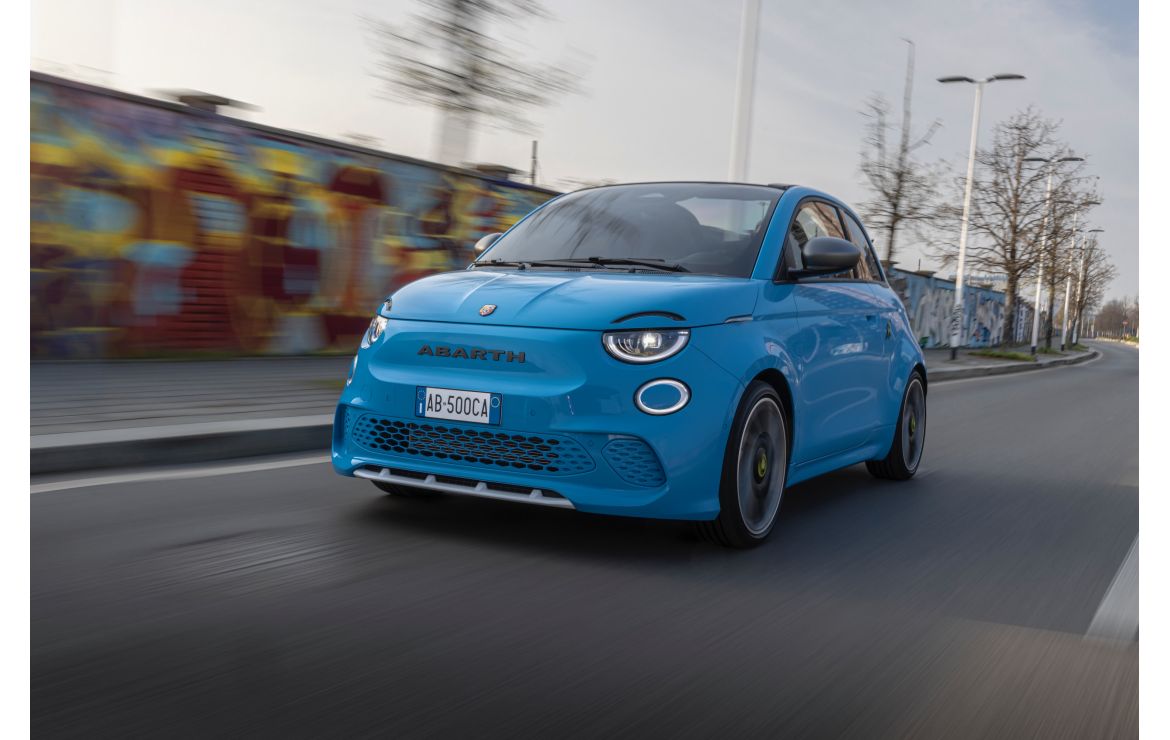
The electric Abarth — a stronger electric motor, aggressive styling, and an external speaker that plays simulated engine sounds. Performance meets electric efficiency with the Scorpion badge.
Search Our Stock ❯The Abarth 500e is a performance version of Fiat's electric 500 platform. Launched in 2023, it combines a 155 hp motor and 235 Nm of torque with revised chassis tuning and an optional-use external sound generator. It is the first fully electric production Abarth.
The Abarth 500e uses a single front-mounted electric motor rated at 155 hp and 235 Nm. That is more powerful than the 118 hp long-range Fiat 500e, and Abarth quotes 0–62 mph in 7.0 seconds.
The motor's immediate response is most noticeable at urban and intermediate speeds. Abarth quotes 0–62 mph in 7.0 seconds, while maximum speed is about 96 mph (155 km/h), not 160 mph.
The battery is 42.2 kWh gross, with about 37.8 kWh usable. Abarth quotes up to 164 miles on the WLTP combined cycle. Actual range changes with speed, temperature, heating, tyres, load and driving style; obtain a battery-health report on a used example.
Warranty terms depend on registration date and market. Check the vehicle documents and ask an Abarth or EV-qualified workshop to investigate charging faults, warning messages or unusual battery-health results.
The car supports AC charging up to 11 kW. Time depends on supply, starting charge and temperature, so confirm the onboard charger and cable supplied with a used car.
DC fast charging is supported at up to 85 kW. A higher-rated public charger will not force the car to accept more than its own limit, and the charging rate normally tapers as the battery fills.
This is the Abarth 500e's most divisive feature. An external speaker mounted below the bumper generates synthesised engine sounds—engine growl on acceleration, a somewhat artificial turbo whistle, and gear-change pops on overrun (mimicking sport mode dynamics in the motor controller). The sound is programmable through the infotainment system.
Opinions split into two camps. Some owners love it—the sound adds fun and character to an otherwise silent EV, replicating the Abarth brand's core identity. Others find it cheesy and prefer the futuristic quietness of electric motoring. The sounds are audible inside and outside the car (roughly 75 dB at 3 metres), which means Abarth 500e owners will definitely attract attention, for better or worse. Turning the sounds off is a button press away if it becomes tiresome.
The 500e platform uses MacPherson strut front suspension and a torsion beam rear—pedestrian engineering. Abarth lowers this setup by 10 mm, stiffening springs and dampers, and adds a sport-tuned anti-roll bar. The result is impressively planted handling for a city car. Body roll is controlled, cornering grip is strong, and the low centre of gravity (battery pack mounted low) helps. It won't out-handle a petrol Abarth 695, but it's far more capable than the standard Fiat 500e.
Brakes use a conventional ventilated disc design with regenerative braking integrated. The regenerative system recaptures energy under braking, improving range by 15-20% depending on driving style (urban driving with frequent braking recovers more energy than motorway cruising). The mechanical brake system handles emergency stops and hill-holding. Brake feel is initially disconcerting for owners unused to EVs—there's a point of engagement where regeneration kicks in, then a transition to friction brakes. After a few days, most drivers adapt.
Inside, the Abarth 500e mirrors the standard electric 500 but with sportier trim. Sport seats (firmer than standard) with red stitching, a flat-bottom steering wheel, and metallic pedals set the tone. The 7-inch touchscreen infotainment system (8.8 inches on higher specs) includes Apple CarPlay and Android Auto, though the interface lags compared to competitors. Climate control is standard.
Notably, the Abarth 500e adds a "Sound Designer" app where owners can customize the external speaker's sound profile—choose between three preset sound signatures, adjust volume, or disable it entirely. This may seem gimmicky until you realize it allows owners to express their preference for Abarth character.
One omission: no sunroof. The standard Fiat 500e offers a glass roof; Abarth skips it, trading height for aerodynamics. The interior remains spacious enough for two adults and kids, though the 185-litre boot hasn't grown.
In a straight 0-62 mph sprint, a petrol Abarth 595 (145 bhp) edges the 500e slightly. But on tight roads and in urban driving, the electric motor's instant torque creates a different sensation. The 500e feels quicker in the 0-40 mph zone where city driving happens. Overtaking from 50-70 mph, the petrol car pulls harder due to higher power. On a racetrack, the petrol Abarth would win—it has more sustained power and higher top speed. For daily driving, the 500e's performance is adequate and feels sharper than its specs suggest.
The Abarth 500e suits drivers with access to home charging and consistent urban/regional use. Someone commuting 40 miles daily, charging overnight at home, and taking occasional long trips on public charging will find it practical. A driver with no home charging or high annual mileage (20,000+ miles) should reconsider—relying on public chargers is more time-consuming and expensive than petrol.
EVs are no longer exempt from VED. For 2026/27, most post-2017 electric cars pay the £200 standard annual rate; first-year rules also change by tax year. Electricity and servicing may still cost less than a petrol Abarth, but use current tariffs, insurance and mileage for any saving claim.
The Abarth 500e maintains aggressive styling with lowered suspension, sport bumpers, and large alloy wheels—the only clue it's electric is the absence of an exhaust.
Battery condition cannot be predicted from age and mileage alone. Request a diagnostic battery-health report, verify AC and DC charging where practical, inspect the charging cable and check the warranty terms that apply to the exact registration.
Abarth 500e buyers should check:
The 500e is Abarth's declaration that performance is not exclusive to combustion engines. Fiat has committed to electrifying the Abarth range—expect turbocharged petrol Abarths to fade within 5 years. The 500e is the first step, proving that instant electric torque and sharp handling can satisfy performance enthusiasts. Future Abarths will likely emphasize acceleration, handling, and driving engagement rather than exhaust notes.
Scorpion badge, zero emissions. Browse our Abarth 500e stock.
Search Our Stock ❯