 🔍 Browse
🔍 Browse
🔍 Browse
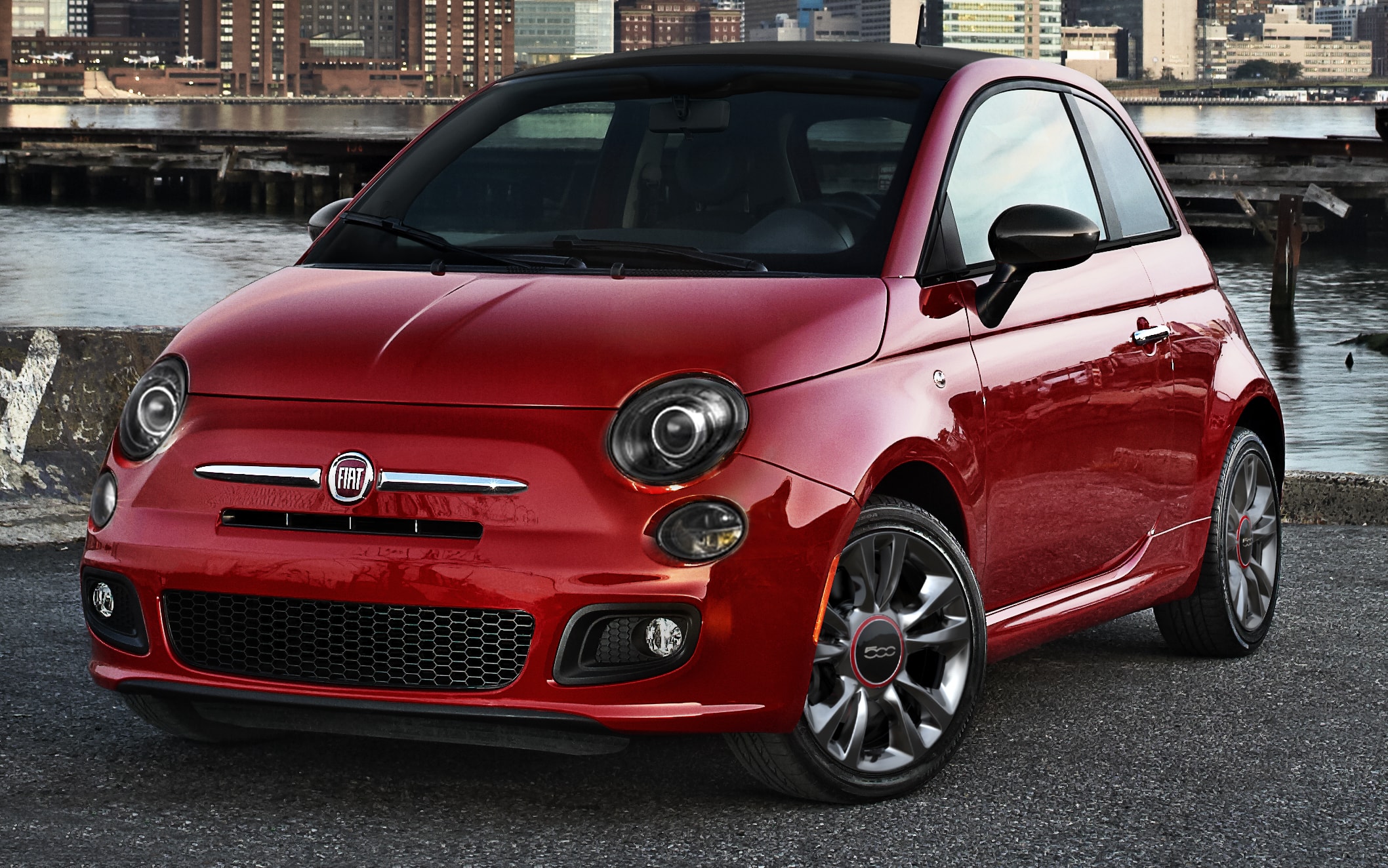
The sporty-looking 500 without the Abarth price tag. Unique body kit, sport bumpers, rear spoiler, and lowered suspension. Available with the standard petrol engines — it's about the look rather than outright performance.
Search Our Stock ❯The Fiat 500 Sport is a trim level, not a separate model. Available from 2008 onwards, it takes the standard Fiat 500 and wraps it in a more aggressive body kit, lowers the suspension, and adds sport seats and wheel upgrades. The result is a car that looks genuinely sporty—bumpers, spoiler, lowered stance—but uses identical engines to the Pop, Lounge, and Dolcevita trims. It's styling over substance, but for those who want the look without the Abarth price tag or insurance penalty, it offers genuine value.
The Sport's visual identity is built on contrast and aggression. The front bumper is redesigned with larger air intakes and integrated fog lights (always standard on Sport), giving the face a wider, more purposeful appearance. The rear bumper is similarly reworked with a diffuser-style treatment and reflector integration. A black plastic rear roof spoiler sits above the rear window—functional in appearance if not in reality (it generates negligible downforce at city car speeds).
The suspension is dropped by 8mm front and rear, noticeable visually and affecting the car's stance noticeably. Combined with the aggressive bumpers and larger 16-inch alloy wheels (compared to 15-inch on base Pop models), the Sport looks planted and purposeful, almost like a budget hot hatch from 20 metres away. Up close, however, the reality is clear—this is a dressed-up city car, not a sports car.
Colour options vary by year, but Fiat consistently offers Sport in white, red, black, and blue, playing up the car's sporty credentials. Some markets got exclusive Sport colours unavailable on other trims.
Inside, the Sport uses sport-spec seats with increased side bolstering and red contrast stitching on seams and headrests. The seat fabric varies by year and market—some use suede-like Alcantara, others conventional cloth with red detailing. For a small car, the seating position is supportive and genuinely comfortable on longer drives. Passenger seat bolstering is less aggressive than driver side, reflecting real-world use priorities.
The flat-bottom leather steering wheel is a subtle touch that does improve driving feel slightly, giving better grip and a sportier ergonomic position compared to the standard three-spoke wheel. Aluminium-effect pedals complete the sport aesthetic. Steering wheel audio controls and cruise control are standard on most Sport models, with more advanced specification adding a 7-inch touchscreen, Bluetooth, and parking sensors.
Storage remains modest—the door pockets are shallow, and the centre console offers limited cubby space. The 185-litre boot is sufficient for weekly shopping or a weekend bag, but not for extended trips. Climate control is often optional, depending on year, though most later Sports (2012+) include it as standard.
This is where the Sport's "styling over substance" position becomes apparent. The Sport is available with two petrol engines: the 1.2-litre FIRE naturally aspirated unit (69 bhp, 102 Nm) or the 0.9-litre turbocharged TwinAir (85 bhp, 145 Nm on the two-cylinder version). Both are borrowed from other Fiat models and deliver predictable performance.
The 1.2 is town-focused, with Fiat quoting 0–62 mph in 12.9 seconds and a 99 mph maximum speed. Fuel economy depends on condition and use; check the exact registration because a Sport badge does not identify the engine by itself.
The TwinAir is the preferred choice for Sport buyers who actually want to drive spiritedly. Two-cylinder turbocharged engines produce a unique character—a higher-pitched exhaust note and more responsive engine feel. The 85 bhp variant reaches 62 mph in roughly 9.5 seconds (not much faster in absolute terms, but the turbo response feels quicker) with a top speed of 124 mph. Fuel economy is similar—44-50 mpg combined—but the TwinAir rewards driving style, responding to throttle inputs more eagerly than the 1.2 naturally aspirated motor.
Neither engine offers performance comparable to an Abarth 500 (135 bhp base). The Sport accelerates significantly slower and lacks the explosive turbo punch. However, for genuine city car duty and occasional spirited B-road driving, either motor is adequate and efficient. The 1.2 prioritizes economy and smoothness; the TwinAir balances efficiency with a bit more personality.
The 8mm suspension drop is relatively modest—noticeable visually and in handling feel, but not transformative. Spring rates are unchanged from the standard 500, so the ride remains compliant. Over bumpy roads, the Sport does feel slightly firmer than a Pop, but the difference is subtle, not jarring. This is a cosmetic suspension drop, not the aggressive lowering of an Abarth or independent tuner setup.
The handling improvement is marginal. The reduced ride height does lower the centre of gravity slightly, improving body control in corners. On tight roads, the Sport feels more confident than a standard 500, though a 595 Abarth would still be noticeably more capable through the same bends. For typical road driving, the Sport's suspension changes are pleasant—subtly sharper without sacrificing ride quality.
The aggressive front bumper, lowered suspension, and 16-inch alloys create a purposeful stance—the key visual differentiator from the standard 500.
Sport models are mechanically identical to other 500 trim levels—same engines, same gearboxes, same electrical systems. Reliability is good, with common issues affecting all 500s: electrical gremlins (occasional window motor failures), interior rattles, and potential clutch wear on manual gearboxes after high mileage. The 1.2 engine is virtually bulletproof if serviced; the TwinAir is reliable but more complex, with turbo service intervals critical (oil changes every 6 months or 6,000 miles, not the 12,000-mile intervals of naturally aspirated engines).
Parts are inexpensive and widely available. The 500 shares components with Panda, 595, and other Fiat models, keeping costs down. A full service costs £120-180 at independent shops, £200-300 at Fiat dealers. Brake pads, air filters, and spark plugs are budget-friendly consumables.
Insurance groups for the Sport are 6-11 depending on year, engine, and transmission—very reasonable for a styled-up city car. A young driver would pay £400-700 annually; drivers over 30 with clean history might see £250-450. This is significantly cheaper than Abarth insurance (groups 25-35).
Road tax depends on registration date and recorded CO₂. For 2026/27, pre-April 2017 cars use their CO₂ band and most later petrol cars pay the £200 standard annual rate. Fuel, tyres, servicing and MOT repairs vary with engine, wheel size, mileage and condition.
Compared to the **Pop** trim (the base model), the Sport adds visual aggression and sport seats—a worthwhile upgrade if you like styling. Compared to the **Lounge** trim, the Sport skips the glass roof that Lounge buyers value; instead, you get a more aggressive stance and sport seats. Lounge appeals to those wanting a premium feel; Sport appeals to those wanting attitude. On the used market, prices are often similar—value depends on individual preference rather than hard value advantage.
The 500 S (Sport special edition, 2013-2019) is a different proposition—an even more aggressive trim with TFT instruments and rarer status. If you want modern, the current Sport is fresher; if you want rarity, the S may have collector appeal.
New Fiat 500 Sports are relatively rare in UK markets (Fiat's marketing focuses on the 500 Lounge and 500X SUV these days). Used examples (2008-2019) are plentiful at £3,000-6,000 depending on mileage and condition. Later examples (2012+) are preferable, offering better equipment (touchscreen, better electrics, improved interior materials). TwinAir examples command slight premiums over 1.2 models for enthusiasts, but the difference is modest (£200-500).
Honest assessment: the Sport is about styling confidence. A owner driving a Sport notices the aggressive front bumper, enjoys the slightly firmer suspension feel, and appreciates the sport seats' support. Others? They see a small, ordinary city car. If you're buying for that psychological boost—feeling a bit more sporty when driving a school run or city commute—the Sport delivers. If you want actual performance, it disappoints compared to an Abarth or even hot hatch rivals like a Fiesta ST.
The Sport's sweet spot is buyers who want their city car to look purposeful without the Abarth brand's attention, insurance penalty, or maintenance complexity. It's a responsible choice with a hint of attitude—practical and genuinely good value on the used market.
Fiat 500 Sport buyers should inspect:
All the visual aggression without the Abarth insurance premium.
Search Our Stock ❯