 🔍 Browse
🔍 Browse
🔍 Browse
Guide prices by year, trim, mileage, and condition. Plus our free instant valuation service.
Get a Free Valuation ❯Tell us year, mileage, trim and condition. Realistic price, not a teaser.
Quick inspection at our Sheffield showroom. Usually under 30 minutes.
Same-day bank transfer. Or use the value against any car in our stock.
Valuing a used Fiat 500 accurately requires understanding multiple factors beyond the simple formula of age and mileage. The model year, generation (pre or post-2015 facelift), engine type, transmission, trim level, service history completeness, condition (mechanical and cosmetic), and regional demand all influence value significantly. A 2016 Lounge with 40,000 miles and full service history might be worth £7,500; an identical car with 80,000 miles and incomplete history could be £6,200. The difference isn't linear with mileage; it reflects market perception, repair risk, and warranty confidence. Understanding how each factor weights helps you arrive at a fair valuation for selling your car or negotiating when buying.
Start with several current dealer listings for the same year, engine, gearbox, trim and similar mileage. Then account for documented history, cambelt or battery condition, tyres, brakes, cosmetic repairs and work due. Fixed deductions per 10,000 miles or percentage premiums for colour, diesel or Dualogic are not dependable across a changing market; current comparable cars and an inspection provide a better valuation.
Dated invoices and a coherent service record add confidence, especially where they prove the correct oil, a 1.2 or 1.4 cambelt change, TwinAir care or relevant hybrid and EV checks. Compare gaps with the VIN-specific schedule: six months or 5,000 miles is not the “proper interval” for every 500. Missing history affects value according to the work and risk it leaves unverified, not a universal percentage.
Age is less important than mileage once a car exceeds 5 years old. A 2018 at 50,000 miles is typically worth the same or more than a 2016 at 80,000 miles, despite being newer. However, age matters for depreciation shape: a 2020 depreciates faster (especially in year 2-3) than a 2018. A 2015 has stabilised in value relative to a 2017. For sellers, newer cars (2021+) depreciate fastest in absolute terms; holding a 2018 is better value-retention than a 2023. For buyers, this means older cars with low mileage are exceptional buys: a 2015 at 35,000 miles is better value than a 2017 at 45,000 miles, despite being two years older.
The 2015 facelift fundamentally altered valuation. A 2015 Lounge is worth roughly 20-25% more than a 2014 Lounge at equivalent mileage (perhaps £1,500-1,800 difference at typical 60,000-mile points). This premium reflects the infotainment upgrade, engine refinements, improved interior, and buyer perception of "modern enough." Pre-2015 cars in the budget market (Pop, Pop Star) hold value reasonably well, but Lounge and Sport trims from 2014 and earlier depreciated harder once the facelift arrived because buyers realised they could get vastly better equipment for only £500-1,000 more. If you're selling pre-2015, expect to move it at the lower end of valuations unless you're confident in buyer knowledge (enthusiasts appreciate the original design). If you're buying, pre-2015 represents opportunity: realistic pricing at £3,500-4,500 for good examples, with character and reliability if mechanically sound.
1.2-litre petrol: Baseline. Reliably valued; most comparable stock is 1.2. TwinAir turbo: If consumption history is documented with dealer receipts showing regular top-ups, it trades at neutral or slight premium (£50-200) because buyers appreciate the performance. If consumption is undocumented, subtract 5-8% (£400-600 on a £7,500 car) because uncertainty creates risk. Diesel: Add 5-8% (£400-600) for equivalent age/mileage because diesel buyers value economy and will often accept higher prices. This premium is tightest for high-mileage cars (motorway buyers expect diesels) and loosest for low-mileage cars (fewer buyers). Electric 500e: Prices are volatile and region-dependent. In London and South East, electric commands 5-10% premium over petrol equivalent. In areas without charging infrastructure, it subtractcts 10-15%. A 2020 electric 500e at 40,000 miles might be £11,000 in London, £9,500 in rural Yorkshire.
Exterior condition: Evaluate paintwork (chips and stone marks are normal on fronts; major scratches affect value), alloy wheel condition (scuffs deduct £50-100 per wheel; replacing a wheel set costs £500-800), rust (surface rust on sills is cosmetic, deep rust is structural and deducts £500-1,500), accident damage history (visible repairs deduct 5-15% depending on severity and repair quality). Interior condition: Assess seat wear (light wear is normal; bolster damage deducts £200-400 per seat if bad enough to require recovery), steering wheel shine (worn to plastic suggests high-mileage use despite low speedo reading), dashboard cracks (common, minor, deduct £50-100 for each), and staining or odours (musty/damp smells deduct 10-20% for mould remediation risk). A good interior is worth 8-15% more than a worn equivalent; interior condition often matters more to buyers than exterior because it's harder to fix cosmetically and affects daily pleasure. If you're selling, a £100 interior detail-vac and wipe is worth £200-300 in perceived value.
Value each car from its exact engine, gearbox, trim, age, mileage, condition and documented history. The combustion-engined 500 did not gain a CVT or six-speed petrol automatic: selected 1.2 and TwinAir 85 cars used five-speed Dualogic, while the electric 500 uses a single-speed reduction gear. Current comparable listings and a mechanical inspection are more reliable than fixed percentage premiums.
High mileage (100,000+ miles): Adjustment is non-linear. Crossing 100,000 miles triggers a psychological drop; the market often devalues cars by £500-800 simply for exceeding this milestone, regardless of condition. A 95,000-mile car might sell for £6,200; the same car at 105,000 miles could struggle at £5,500. Factor this in if you're near the threshold. Non-smoking interior: Smoking cars deduct 10-20% (smell is pervasive and expensive to fully remediate, £300-500 professional). Non-smoking is now the expected baseline; don't expect premium for it. Full-colour roof or convertible (500C): Soft-top or colour roof systems command 5-10% premiums if functioning well; broken roofs deduct 15-25% (repair costs £800-1,500). Recent major service or repairs: If completed within 3 months of sale with invoices, add back 50% of the repair cost (a £400 service cost adds £200 value; a £1,500 transmission repair adds £750). Remaining manufacturer warranty: Factory warranty (typically 3 years on pre-owned dealer cars) adds 3-5% for peace of mind.
London and South East England: highest prices, typically 5-10% above our quoted baselines. Urban demand is strong; stock moves quickly at premium pricing. Scotland and Northern England: 5-8% below South East, reflecting lower population density and longer ownership distances. Coastal regions: 5-10% discounts for vehicles showing salt-induced corrosion. Rural areas: variable; demand is lower, so patience is needed to find buyer at right price. For selling, understand your region: a 2017 Lounge at £7,500 in London might fetch £6,900 in Bristol and £6,500 in Manchester. Use local auto trader prices in your region as your anchor, not national figures.
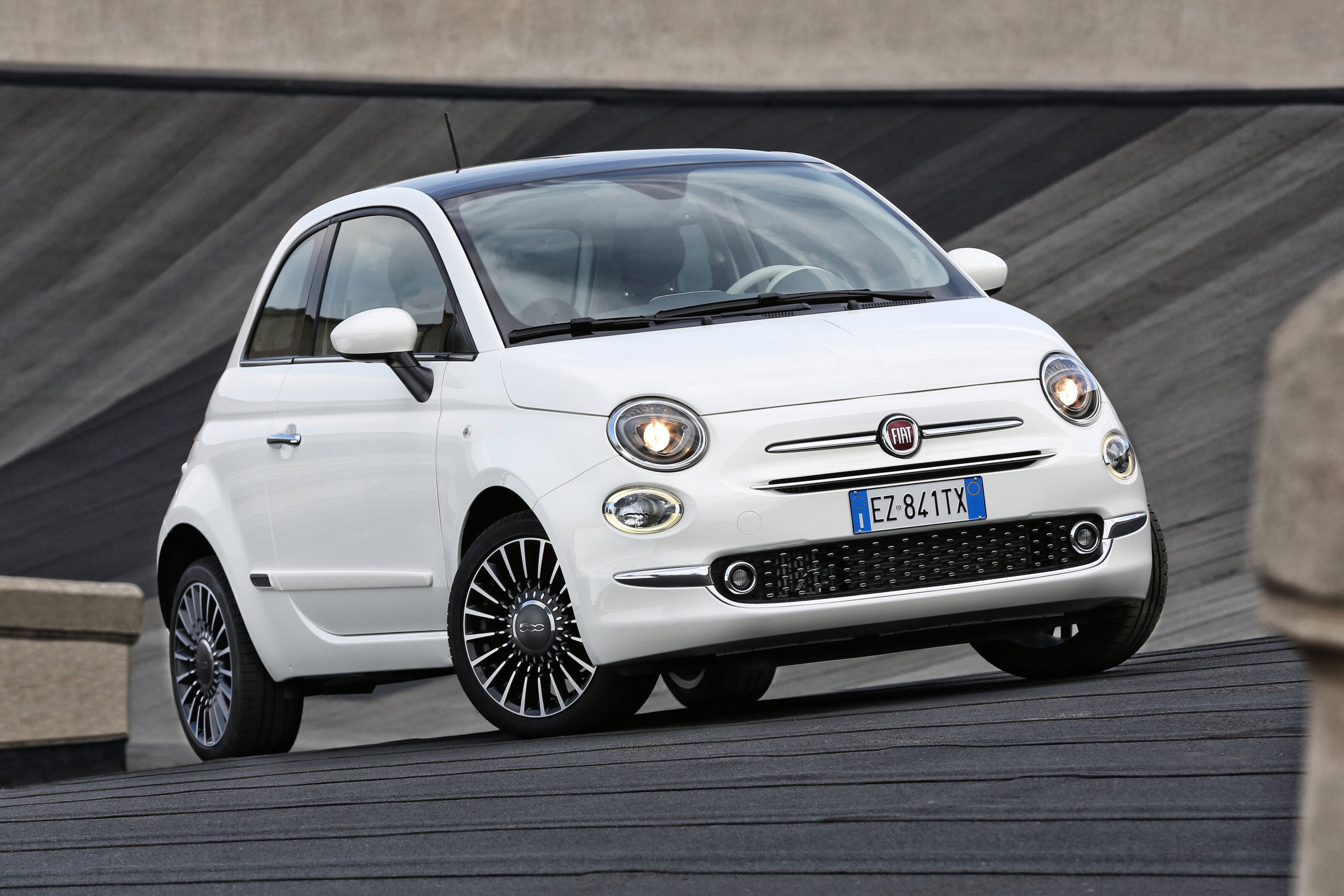
Condition and presentation directly affect valuation; a well-maintained 500 reflects in its asking price.
Step 1: Find 5-10 comparable cars (same year, engine, trim, ±5,000 miles, similar condition) on Auto Trader or dealer websites. Note their asking prices. Step 2: Identify deviations from your car (mileage, condition, colour, spec) and estimate +/- adjustments using our guidelines above. Step 3: Average the comparable prices and apply your adjustments. Step 4: Cross-check with whatcar.com and CAP Black Book valuation tools (subscription, though basic estimates free). Step 5: If selling privately, price 3-5% below the mid-point to generate interest and quick sale. If selling to a dealer, expect 10-15% below mid-point; dealers need margin. Step 6: Get a specialist pre-purchase inspection valuation; a Fiat expert's opinion is worth £100-200 to confirm your estimate and catch hidden issues affecting value.
Tell us about your 500 and we'll provide a realistic estimate.
No faceless online platform. 60+ years experience. We know what your 500 is worth.
Search Our Stock ❯