 🔍 Browse
🔍 Browse
🔍 Browse
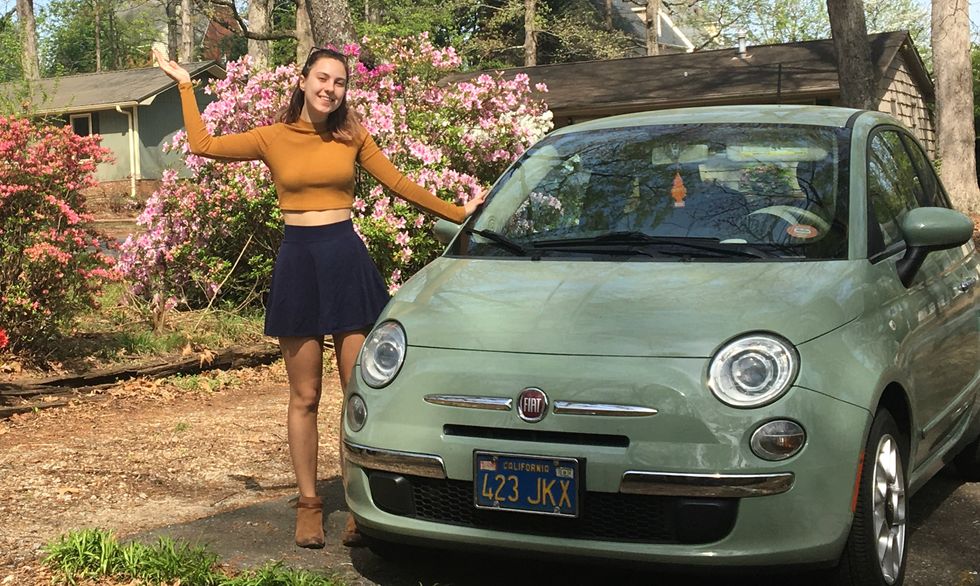
Low insurance, cheap to run, easy to drive, easy to park — the Fiat 500 is one of the UK's most popular first cars. Here's why.
Search Our Stock ❯At Fiat 500 Frenzy, we're Sheffield's only dealership dedicated exclusively to the Fiat 500. With over 60 years of combined motor trade experience, Tom and Shane have the expertise to guide you through every aspect of Fiat 500 ownership. Whether you're buying, selling, or just researching, we're here to help — no pressure, just honest advice from people who genuinely love these cars.
The Fiat 500 has become synonymous with accessible, affordable motoring for new drivers. It outsells direct competitors like the Toyota Aygo and Mini Cooper in the first-car market by a significant margin. Why? The combination of affordability (used Pop models from £3,500), tiny dimensions (ideal for learning in car parks and tight streets), acceptable performance (perfectly adequate 1.2-litre engine), low insurance costs (groups 1-3 for the standard 1.2 Pop), and—crucially—undeniable style. A young driver in a 500 feels like they've made an interesting choice, not a compromise. The car has character. It's also mechanically simple enough that ownership doesn't demand advanced knowledge, yet reliable enough that it won't become a financial burden. You won't overspend on repairs; a new clutch is cheaper than many competitors, and parts are affordable.
The entry-level Pop with the 1.2-litre petrol engine and five or six-speed manual transmission is the logical first-car choice. At £3,500-4,500 for a 2013-2014 example with decent history, it's affordable as a first purchase. The 1.2 engine produces 69 horsepower—enough to merge motorways safely, not so much that it tempts rash acceleration. It's naturally aspirated (no turbo lag to confuse learners), with linear power delivery and transparent feedback. Real-world fuel economy is 45-50mpg, keeping fuel costs reasonable on a young driver's budget. The manual transmission teaches essential driving skills: smooth throttle control, progressive acceleration, proper braking anticipation (no relying on automatic failsafes). It's also the cheapest option, both to purchase and maintain. Insurance for a 1.2 Pop on a young driver is roughly £600-900/year at age 17-18, escalating based on region and claims history. By age 25, premiums drop to £200-300/year for clean records.
Pop is genuinely adequate for first-car purposes. It includes the essentials: five seats, air-con (on most 2012+ examples), power steering, and basic safety equipment (airbags, ABS, electronic stability control). Lounge adds comfort: electric windows, better seats, alloy wheels, and improved interior trim. For a first-time buyer, Lounge is a nice-to-have but not necessary. The money saved buying Pop (£1,000-2,000 less than Lounge at equivalent age/mileage) is better spent on insurance, fuel, and maintenance budget. Once a young driver has two years of claim-free driving and built competence, upgrading to Lounge or higher in future purchases makes sense. As a first car, Pop is the financially smart choice.
A 1.2 Pop can be economical, but fuel, insurance, maintenance and tax all vary. For 2026/27, many pre-April 2017 1.2 cars fall into the £20 or £35 CO₂ bands, while later cars normally pay the £200 standard rate. Check the exact registration, get a driver-specific insurance quote and include annual servicing plus the age-based cambelt interval in the budget.
Insurance dominates first-car economics. A 1.2 Pop is in insurance group 1-3 (the cheapest category), yet a 17-year-old male with no driving experience still pays significantly. Typical annual premiums are £800-1,200 for a 17-year-old, rising to £1,500-2,200 if they've had an accident or claim. A 20-year-old without claims pays £400-600. By 25 with a clean record, you're looking at £200-350. The safest bet is adding a young driver to parents' insurance as a named driver (often significantly cheaper than standalone young-driver policies), provided the car is also insured under the parents' policy. Telematics insurance (black box) can reduce young-driver premiums by 10-20% if the driver's behaviour is monitored and safe. Always get insurance quotes for your specific car, driver age, and claims history before purchasing; insurance costs can make or break the affordability equation.
The 1.2 engine is generally reliable, but it uses a toothed timing belt rather than a chain. Fiat specifies replacement at least every five years regardless of mileage, shortened to four years in demanding use, so ask for a dated invoice. Also check that the air conditioning works, the clutch engages smoothly, the gearbox selects every ratio cleanly and the car has a consistent service history. On higher-mileage examples, inspect suspension, brakes, tyres and electrical equipment rather than relying on age or mileage alone.
The 1.2 Pop is motorway-capable but not motorway-optimised. It safely merges at 70 mph and cruises comfortably at legal speeds, but the experience is noisier and less refined than a larger hatchback. Fuel economy drops to 40-45mpg on sustained motorway driving (due to aerodynamic drag at constant speed). The 185-litre boot isn't ideal for long trips (good for shopping, inadequate for two-week holidays with passengers). The steering is direct and engaging on country roads; on motorways it's responsive but requires more input than power steering in a larger car. For a young driver who plans motorway commuting or regular long journeys, consider a slightly larger hatchback (Golf, Focus) despite higher purchase price. If driving is primarily urban/suburban, the 500 is perfectly adequate and cheaper to run.
The compact dimensions (3.6 metres long, 1.6 metres wide) make the 500 an excellent learning tool. Car parks are easier to navigate; tight urban streets feel manageable rather than intimidating. The visibility is good from the driving position; the driver sits upright (not reclined like sports cars), giving a commanding driving position. The steering is light and responsive, making small corrections intuitive. The manual transmission teaches gear selection and smooth clutch control without the distraction of excessive horsepower tempting aggression. The small wheelbase means handling is forgiving; oversteer is unlikely unless deliberately provoked. In cities like Leeds, Manchester, or London, a 500 is actually easier to learn in than a larger car; experienced drivers might find it unsophisticated, but young drivers find the simplicity and responsiveness confidence-building.
Avoid Dualogic automatics (2008-2014 models) at any cost; the transmission is problematic and makes a poor first experience. Don't overpay for appearance: a 2008 Pop in immaculate condition is not worth more than a 2012 Pop in good condition; the older car will have more expensive repairs ahead. Skip higher trims if your budget is limited; insurance costs increase slightly (Lounge or Sport trims sit in group 4-6 vs 1-3 for Pop), and maintenance isn't materially different, so the extra spend doesn't return value. Avoid high-mileage examples (over 100,000 miles) unless price is exceptional; repair costs escalate non-linearly at high mileage. Don't neglect the pre-purchase inspection; £100-150 spent here prevents £1,000+ in surprise repairs. Finally, don't assume you'll keep your first car for years; young drivers' needs change, and circumstances shift. Buy something you can afford to maintain, not something you love; your second car is when you fall in love.
The compact size and fun styling make the 500 appealing and confidence-building for new drivers.
Build a first-car budget from the actual purchase price, an insurance quote for the driver, realistic annual mileage, the registration's current VED and an inspection of work due. A 1.2 can cost £20, £35 or £200 in VED for 2026/27 depending on registration and recorded CO₂.
Sheffield's dedicated Fiat 500 specialists. 60+ years combined experience.
Browse Stock ❯