 🔍 Browse
🔍 Browse
🔍 Browse
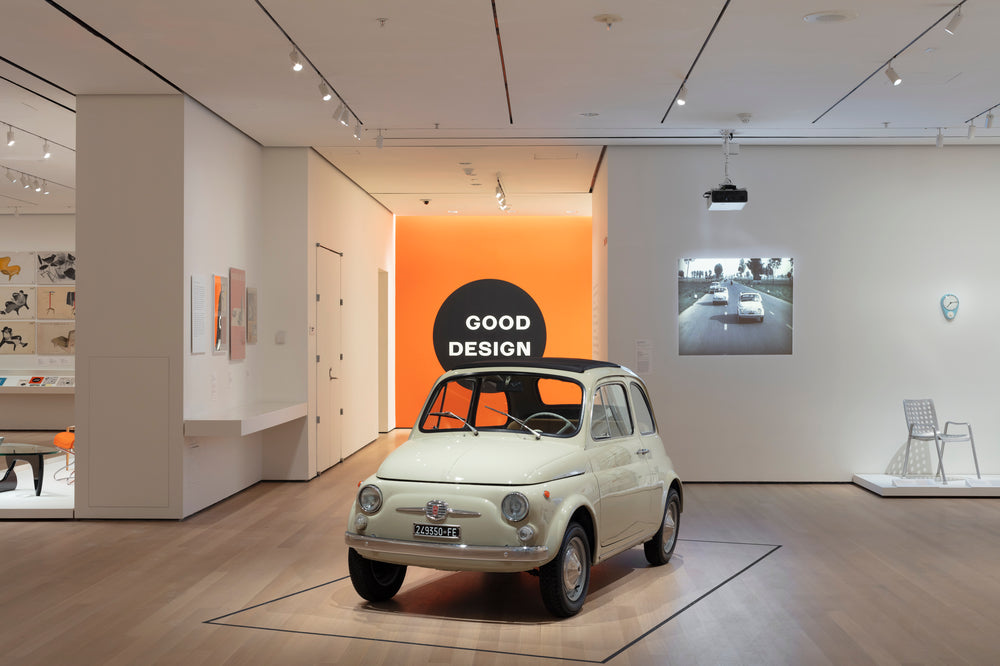
Designed by Dante Giacosa, the 1957 Nuova 500 was the car that motorized post-war Italy. A 479cc rear engine, four-speed gearbox, and space for four adults created a masterpiece of economical engineering that sold 3.9 million units.
Find a Classic 500 ❯Engineer Dante Giacosa faced a profound challenge in 1955: design an affordable family car for an economically recovering Italy using strict cost and size limitations. His solution, the Nuova 500, became one of automotive history's greatest achievements—not despite its constraints but because of them.
The rear-engine layout was intentional, not accidental. By mounting the 479cc engine behind the rear axle, Giacosa freed the front axle for an enormous interior. A car measuring just 2.97 metres long could accommodate four adults and their luggage—a feat of ingenious packaging that competitors could not match.
The Nuova's power plant was refreshingly simple: a two-cylinder, air-cooled engine producing 13 bhp. For context, this was roughly equivalent to a modern 100cc motorcycle. Yet through clever carburetion, proper gearing, and minimal vehicle weight (480 kg), the 500 achieved surprising vitality in urban driving. The 95 km/h top speed was respectable for the era; acceleration (0–100 km/h in ~18 seconds) was adequate for highway entry.
Fuel consumption of 5.5 litres per 100 km (42 mpg) was exceptional, even by today's standards. At 1957 prices, a 500 owner could travel across Italy for pocket money. No wonder it became the car of Italy.
The Nuova's interior was a masterclass in spatial efficiency. Fold-flat rear seats created cargo space; removable roof panels transformed it from sedan to convertible; tool storage was integrated throughout. Even the spare wheel was removable to save weight—and cost—if buyers wanted to save money.
By modern standards, Nuova 500s were vulnerable to corrosion. Minimal rust prevention, steel bodywork exposed to salt and humidity, and simple assembly meant that surviving examples are prized precisely because so few remain. Today, a well-preserved Nuova is a treasure, and restoration is expensive precisely because the original engineering prioritized cost over longevity.
The Nuova 500 arrived at the exact moment Italy needed it. Post-war recovery was accelerating. Family incomes were rising. Yet cars remained luxury items beyond most Italians' reach. The 500 changed this equation.
At approximately 500,000 lire (hence the name), a new 500 cost roughly what an Italian worker earned annually—expensive but achievable through installment plans and family savings. Suddenly, the middle-class family could own a car. Young couples could escape to the countryside. Businesses could deliver goods efficiently.
Cinema captured this liberation perfectly. In the 1960s and 1970s, Italian films featured 500s as character vessels—the poor working-class girl with her cherished 500, the young couple escaping society's constraints, the spirited youth claiming personal freedom. The 500 became a visual metaphor for the newly prosperous Italy—accessible, joyful, and unapologetically Mediterranean.
By the 1970s, when the final Nuova 500 left the Turin factory, nearly 4 million had been built. It remains one of the best-selling cars of all time, and its cultural impact transcended automotive categories entirely. The Nuova 500 became a design icon, featured in museum collections globally.
Original Nuova 500s are increasingly scarce. Most have been retired from daily use; many were scrapped due to rust. Surviving, roadworthy examples command prices from £8,000 to £30,000+ depending on condition, mileage, and specification. Fully restored examples or rare variants (especially Abarth 595/695 versions) exceed £50,000 regularly.
Rust is the critical factor. Examine the floor, sills, and rear inner wings carefully—corrosion here typically means structural compromise. Original panels and factory paint are prized. Engine condition should be checked via compression test; worn piston rings are common. Upholstery, glass, and trim are expensive to replace authentically.
A roadworthy Nuova 500 is charming but demands care. Performance is modest by modern standards; highway cruising requires patience. Ventilation is minimal; air conditioning does not exist. Mechanical sympathy is required—these are delicate machines, not robust workhorses.
Maintenance is straightforward: points-based ignition, carburettor fuelling, and basic electricals mean spares are available, and servicing is uncomplicated. Many specialist restorers offer Nuova 500 support.
Fiat 500 Frenzy specializes in classic and modern 500s. Expert advice on every model.
Browse Our Classic Stock ❯