 🔍 Browse
🔍 Browse
🔍 Browse
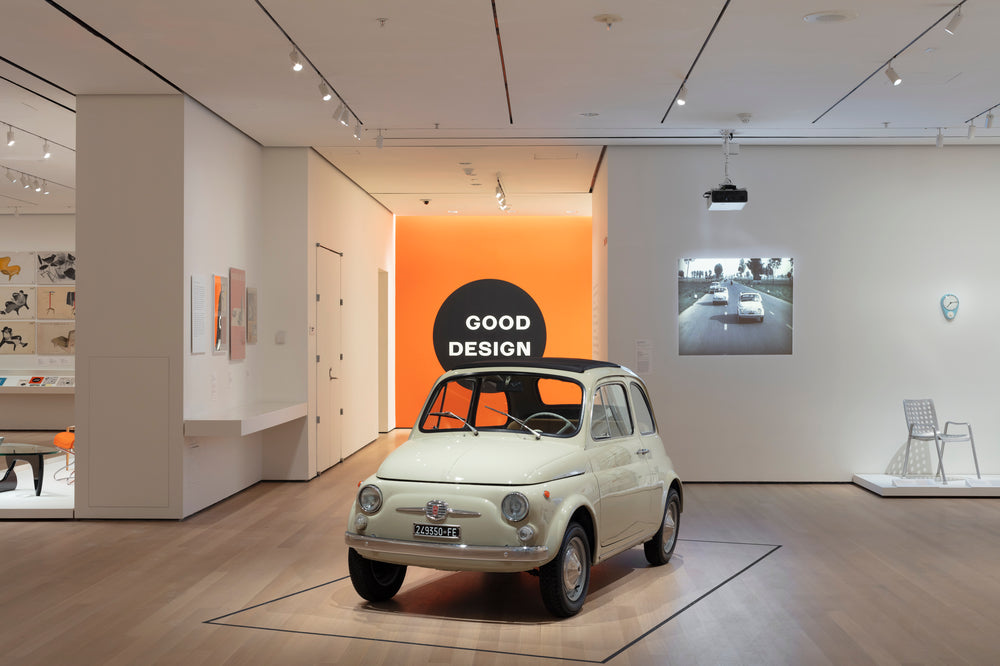
Few cars earn iconic status twice in a single lifetime. The 500 did. From post-war necessity to global cultural phenomenon, the 500's journey spans seven decades and three continents.
Search Our Stock ❯Post-war Italy in the mid-1950s faced a unique challenge: how to motorize a nation still recovering from economic devastation. The masses needed affordable transport, yet Italian manufacturers lacked the scale of Detroit or British Leyland. Fiat, Italy's automotive colossus, saw the opportunity.
Under the direction of engineer Dante Giacosa, Fiat designed a car so clever that it would sell 3.9 million units across 18 years without fundamental mechanical change. The 1957 Nuova 500 (Italian for "New 500") was a marvel of economical engineering: a rear-mounted 479 cc two-cylinder air-cooled engine producing a modest 13 bhp, paired with a four-speed gearbox and a compact chassis measuring just 2.97 metres long. Weight was minimized wherever possible—even the spare wheel was optional.
What made the 500 revolutionary was not raw specification but intelligent packaging. The rear engine layout freed up interior space in a car barely 1.3 metres wide. Fold-flat seats, removable roof panels, and clever storage made the 500 feel far larger than its dimensions suggested. A top speed of 95 km/h was respectable for the era; fuel consumption of 5.5 litres per 100 km made it economical even in 1957.
Production began in July 1957, and the 500 became an instant phenomenon across Europe. It was not fast, not luxurious, and not powerful—but it was affordable, reliable, and genuinely fun. Italians embraced it with characteristic passion. Young couples escaped to the Amalfi coast; families crossed borders for holidays; it became the car of dolce vita cinema, the vehicle of liberation and personal freedom in an economically recovering Europe.
By 1975, when the final Nuova 500 left the Turin assembly line, 3,938,836 had been built—a testament to engineering brilliance and cultural resonance that transcended mere automotive specification.
The Fiat 500 story did not end in 1975. Instead, continuity became tradition. The Fiat 126 (1972–2000) continued the rear-engine philosophy with slightly increased displacement (126 cc initially, expanding to 701 cc) and the same affordable-transport mission. While the 126 lacked the styling icon status of the Nuova, it carried the 500's spirit forward across Eastern Europe and beyond, selling millions more units into the early 2000s.
Through the 1980s and 1990s, the 500 heritage lay dormant in Fiat's active production portfolio, yet it never disappeared from popular consciousness. Italian design culture—from fashion houses to furniture makers—cited the Nuova 500 as a masterpiece of functional minimalism. Museum collections across Europe acquired examples. Vintage 500s became sought-after classics, their values climbing steadily.
In 2007, Fiat took a bold decision: to revive the 500 name not as a retro nostalgia exercise but as a modern, mass-production city car capable of meeting contemporary emissions, safety, and comfort standards. The gamble succeeded beyond imagination.
Unveiled at the Geneva Motor Show in March 2007, the new Mk3 500 (internally coded the Trecento, after the Italian for 300—referencing the Trecentocinquanta, or 350 in Italian) was designed by Frank Stephenson and Roberto Giolito at Fiat's Turin design studio. Their vision: honor the Nuova's proportions and character while creating a thoroughly modern car.
The result was a car measuring 3.63 metres long (nearly 70 cm longer than the Nuova) powered by 1.2 or 1.4-litre petrol engines, or a 1.3-litre diesel. Modern safety equipment, air conditioning, power windows, and infotainment were standard or optional. The driving position was raised compared to its ancestor; visibility was excellent; driving dynamics were sharper than expected for a city car.
Yet the Mk3 500 retained the essence of the original: proportionate simplicity, accessible price point, emotional appeal that transcended specification sheets. Within 18 months, a quarter-million had been ordered. Today, cumulative Mk3 500 sales exceed 2.5 million units globally, making it one of the best-selling European cars of the 21st century.
The 500 story became a full circle: a car born from post-war necessity had evolved into a symbol of contemporary minimalism and sustainable city living. Environmental concerns about urban congestion and emissions made the small, efficient 500 genuinely relevant. Climate change, not nostalgia, drove demand.
The Fiat 500's journey transcends automotive history. It became embedded in global popular culture in ways few vehicles achieve. Cinema, fashion, design, and art have all claimed the 500 as their cultural property.
Cinema: The Nuova 500 featured prominently in the 1969 Italian Job film, becoming synonymous with cool, escapism, and Mediterranean adventure. Decades later, the Mk3 500 appeared in Cars 2 (2011), introducing the brand to a new generation. Italian cinema of the 1960s–1980s frequently featured 500s as character vessels—the poor working-class girl, the young couple in love, the spirited youth—making the 500 a visual shorthand for Italian identity itself.
Fashion: The 500's compact proportions and instantly recognizable silhouette attracted fashion designers. From Gucci to Versace, collaborations with Fiat created limited-edition 500s that blended automotive and fashion cultures. The 500 became a canvas for Italian design expression, with bespoke interiors, hand-painted exteriors, and design partnerships elevating it beyond mere transport.
Museums & Heritage: The Nuova 500 earned places in the permanent collections of the Museum of Modern Art (MoMA) in New York and the Pinakothek in Munich. Design historians consistently rank the 500 among the greatest design achievements of the 20th century, alongside the Eames chair and the iPhone. Industrial designers cite it as a masterclass in constraint-driven innovation.
Advertising & Branding: The 500 has fronted global advertising campaigns for luxury brands, fashion houses, and technology companies. Its instantly recognizable silhouette requires minimal branding—a 500 shape alone communicates Italianness, accessibility, and joy. That communication power is rare and valuable.
In 2020, Fiat introduced the 500e—a fully electric version of the Mk3 500, signalling the brand's commitment to sustainable mobility. With an electric motor producing 118 bhp and a 42 kWh battery offering real-world range of approximately 320 km, the 500e marries 21st-century technology with the 500's core mission: accessible, enjoyable urban transport.
The 500e does not abandon the 500's spirit; instead, it evolves it. Zero-emission driving, lower running costs than petrol rivals, and Apple CarPlay/Android Auto integration make it contemporary. Yet it remains compact, affordable (relative to rivals), and visually unmistakable as a 500.
The electric 500 represents the ultimate irony: a car born from post-war petrol rationing now evolves into a zero-emission vehicle—solving contemporary environmental challenges using the same minimalist philosophy that solved 1950s resource scarcity.
Constraint as catalyst: The Nuova 500 was born from severe limitations: minimal budget, restricted displacement (engine size was limited by taxation), tiny footprint. Dante Giacosa transformed these constraints into virtues. The result was a car of compelling simplicity that inspired industries beyond automotive.
Longevity through relevance: Unlike most cars, the 500 remained culturally relevant across seven decades by adapting its message rather than its core values. The Nuova solved mobility poverty; the 500e solves environmental crisis. Same car, different problems solved.
Emotion over specification: The 500 has never competed on power, luxury, or space. It succeeds because it generates emotion. Drivers love 500s not because of 0–60 times but because 500s make them smile. That emotional connection is remarkably enduring and commercially powerful.
Design as communication: The 500's proportions—round headlights, compact stance, visible character—communicate instantly across language and cultural barriers. In an era of homogenized car design, the 500's distinctive personality is a superb asset. Design matters more than ever.
Experience the 500 story firsthand. Sheffield's dedicated Fiat 500 specialists.
Browse Our Stock ❯