 🔍 Browse
🔍 Browse
🔍 Browse
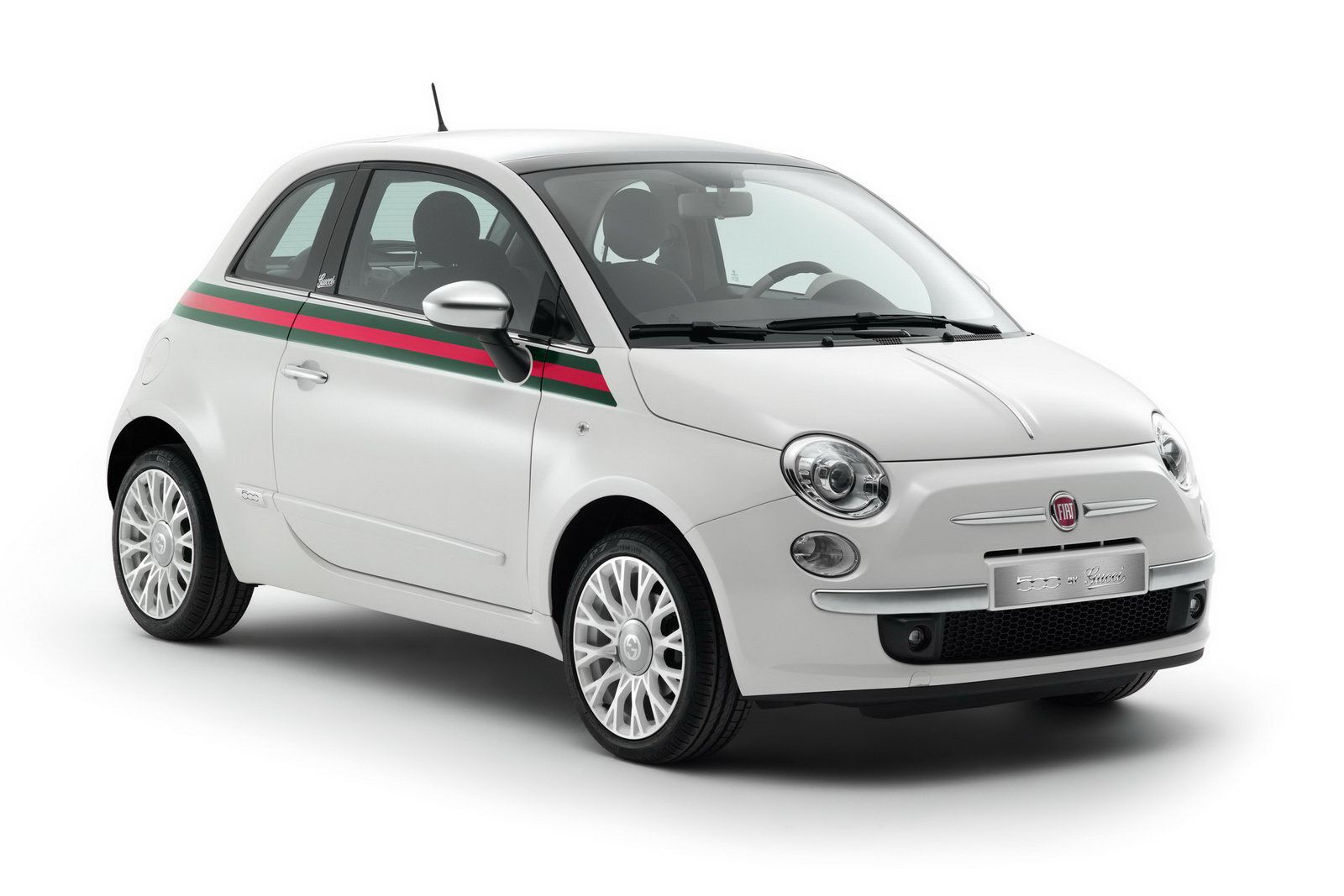
Green/red stripe detailing, GG monogram interior, bamboo-effect trim. Three separate production runs. The 2007 original is the most collectable, with fewer than 1,000 UK examples surviving.
Source This Edition ❯When Fiat and Gucci collaborated in 2011, they created something that transcended traditional automotive design. The 500 by Gucci wasn't simply a car wrapped in designer branding—it was a statement piece. This partnership marked the first time Gucci had created a complete automotive vision, and Fiat selected the iconic 500 as the perfect canvas for Italian luxury craftsmanship meeting haute couture.
The 2011-2012 Gucci edition arrived as bold, unmistakable, and unapologetically fashion-forward. Black became the signature exterior colour, adorned with Gucci's signature green and red stripe running the length of the car. This wasn't a subtle detail; it was the defining visual element that announced to the world exactly what you were driving and what values you prioritised. In an automotive landscape dominated by conservative design, the Gucci 500 dared to be different.
What made this collaboration particularly significant was its exclusivity. Gucci didn't simply license their name; they invested in every detail. The partnership was time-limited and production numbers were strictly controlled. Fiat produced fewer examples in the UK than many realised, making the Gucci 500 a genuinely rare sight on British roads today. Those who secured one in 2011-2012 made a prescient investment—values have appreciated considerably as collectors have recognised the historical importance of this design moment.
The 500 by Gucci's exterior design was refreshingly simple in concept yet masterfully executed. Glossy black paint provided a luxurious base that allowed the iconic green and red Gucci house stripe to command attention. This stripe, measuring approximately 230mm wide, ran from bonnet to boot lid down the car's centreline, creating a visual focal point that immediately identified the vehicle as something special.
Rather than adorning the car with Gucci logos or branding, this restraint in badging made the design more sophisticated. Those familiar with luxury fashion recognised the green and red stripe instantly; to everyone else, it was simply an exceptionally stylish black 500. This understatement is what sophisticated buyers appreciated—genuine luxury doesn't require shouting.
Chrome detailing differentiated the Gucci edition from standard models. The window surrounds, door handles, and mirror caps received special treatment with polished chrome finishes that caught the light beautifully. Against the black paint, these chrome accents created jewel-like highlights that elevated the 500's appearance to something genuinely premium-feeling.
The alloy wheels were specific to the Gucci edition, featuring a contemporary design that complemented the fashion-forward aesthetic without overwhelming the proportions. Gucci 500s could be specified in either hatchback or cabriolet body styles, and the open-top version was particularly striking with the stripe continuing across the fabric roof.
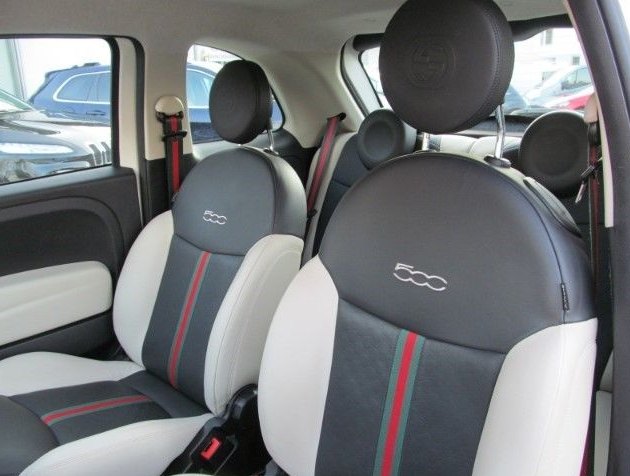
If the exterior made the statement, the interior revealed the craftsmanship. Stepping into a 500 by Gucci was a sensory experience that justified the premium pricing. The design team had carefully considered every touchpoint, ensuring that the luxury extended beyond aesthetics into genuine quality and usability.
The standout feature was the GG monogram upholstery. Gucci's double-G logo was woven into the seat fabric in a pattern that was recognisable to those who understood luxury design, yet subtle enough not to feel garish. This wasn't merely decorative—it was high-quality woven textile that demonstrated Gucci's commitment to materials standards. The seats provided comfortable support while maintaining the fashion-conscious aesthetic that defined the edition.
Bamboo-effect trim adorned the dashboard and door panels. This material choice was deliberately referential to Japanese design traditions and forest sustainability—themes that aligned with Gucci's positioning in the luxury market. The warm, natural tone of bamboo-effect trim provided elegant contrast against the black upholstery and created a distinctly upmarket cabin environment.
The steering wheel, gear knob, and other contact surfaces received special attention. Where standard 500s used conventional materials, the Gucci edition incorporated tactile luxury elements. Every surface you touched communicated that this was a carefully curated driving experience.
Leather elements featured throughout, finished to Gucci specifications. The headlining and trim pieces were colour-coordinated with the overall scheme, creating a cohesive interior environment that felt genuinely premium. Climate control, electric windows, and other convenience features ensured that the luxury wasn't purely visual—it functioned in real-world driving.
The 500 by Gucci offered buyers a choice of two engine options, each providing different characteristics for varying driving preferences. Engine selection didn't affect the exterior styling—whether you chose the economical or sporty option, you maintained the full Gucci visual presence.
The 1.2-litre 69 hp engine: This naturally aspirated four-cylinder produces 102 Nm of torque. Fiat's published standard-engine figures are 0–62 mph in 12.9 seconds and a 99 mph maximum speed, making it a town-focused rather than performance choice.
The 1.4-litre 100bhp Engine: This more powerful unit represented the performance option, offering significantly better acceleration and motorway responsiveness. The 1.4 produced 100 horsepower and 140Nm of torque, making the 500 feel genuinely sprightly in real-world driving. The 0-60mph time dropped to approximately 9.6 seconds, and the top speed increased to around 130mph. This engine was particularly suited to cabriolet buyers who wanted better performance to match the open-top driving experience. Fuel consumption was noticeably higher than the 1.2, but the driving experience was considerably more engaging.
Both engines were paired with smooth five-speed manual transmissions as standard. The 500's light steering and compact dimensions meant that even the 69bhp version never felt fundamentally underpowered for urban driving, though the 100bhp option transformed the driving character entirely.
Ten years after its 2011 launch, the 500 by Gucci remains one of the most significant automotive design collaborations. It established a template for how fashion houses could engage with automotive design—not through superficial branding, but through genuine creative partnership and material excellence.
The green and red stripe has become iconic in 500 enthusiast circles, instantly recognisable and deeply coveted. Gucci's decision to restrain the use of their brand name—relying instead on the stripe and the quality of the interior execution—demonstrated mature design thinking. This restraint is precisely why the Gucci 500 hasn't dated aesthetically; it's timeless rather than trendy.
For collectors, the significance lies in the moment it represents. This was Fiat and Gucci at the height of design confidence, collaborating without compromise, producing limited numbers, and creating something that genuinely enhanced both brands' legacies. The 500 provided Gucci with automotive credibility; Gucci elevated the 500's cultural positioning from practical transport to cultural statement.
Today's 500 by Gucci owners are custodians of this design heritage. Maintaining these cars in original condition—preserving the GG monogram upholstery, protecting the black paint and signature stripe, keeping the bamboo-effect trim pristine—is an act of conservation. These aren't merely used cars; they're archived moments in design history.
Owning a 500 by Gucci is significantly different from owning a standard 500. The fashion-forward exterior means the car attracts attention constantly. In urban environments, this is part of the appeal; on motorways or in rural settings, you may find the design more polarising. This is a car that demands a degree of self-confidence and design appreciation from its owner.
The interior, while beautiful and genuinely luxurious, requires careful maintenance. The GG monogram upholstery, while durable, shows dirt and marks more readily than neutral fabrics. The bamboo-effect trim, though not fragile, benefits from gentle cleaning rather than aggressive detailing. Buyers should understand that original interiors are irreplaceable—damage is permanent.
Mechanically, the 500 is straightforward. Both engine options are known for reliability, though the 1.2 requires less intensive servicing. Parts availability is excellent for mechanical components; only the Gucci-specific interior trim presents challenges. Insurance costs are marginally higher than standard 500s due to valuations, but typically not excessive.
Practicality is limited by the 500's inherent design—this is an urban, short-journey car rather than a long-distance cruiser. The boot space is modest, rear legroom is tight for adults, and highway driving at sustained speeds is tiring rather than enjoyable. This isn't a car you buy for functionality; you buy it for presence and design appreciation.
The 500 by Gucci is best suited to conscientious owners who appreciate design, understand the rarity they own, and commit to preservation. These cars reward careful stewardship with stable or appreciating values. For casual drivers seeking basic transport, a standard 500 is the better choice.
Finding a quality 500 by Gucci requires patience and expertise. The combination of fashion branding, limited production, and a decade-plus of ownership means that surviving examples vary dramatically in condition.
Cosmetic Condition: The black paint should be deep and lustrous, showing no fading or oxidation. The green and red stripe requires careful inspection—any signs of lifting, fading, or damage significantly impact value. Chrome detailing should be unblemished; any pitting or oxidation indicates neglectful ownership. Original Gucci-specific alloy wheels should be present (replacement wheels substantially diminish value).
Interior Assessment: The GG monogram upholstery should show no tears, stains, or fading. Run your hand across the seats—any hardness or discolouration suggests sun exposure and deterioration. The bamboo-effect trim should be free from cracks, warping, or obvious repairs. The steering wheel leather should be soft without excessive wear. These interior elements are costly to restore and don't recover value well after damage.
Service History: Comprehensive documented service history from specialist suppliers is essential. Interval servicing at appropriate mileage indicates conscientious ownership. Any gaps in service history, particularly on higher-mileage examples, suggest potential mechanical issues. Request all receipts and maintenance documentation.
Mechanical Inspection: Have any purchase independently inspected by a 500-specialist mechanic. Listen for engine smoothness, check for smoke or knocking on cold starts, and verify smooth gear changes. Suspension should feel tight without rattles. Electrical systems should function completely.
Mileage Considerations: Examples under 50,000 miles command premiums; those with over 80,000 miles should be discounted accordingly. However, a high-mileage car with impeccable service history may be preferable to a lower-mileage car with gaps in maintenance.
At Fiat 500 Frenzy, we actively hunt for quality 500 by Gucci examples for our clients. Our team understands exactly what distinguishes a genuinely special Gucci 500 from merely an old black 500 with stripes. If you're seeking a specific example, contact us with your requirements and budget—we'll source exactly what you're looking for.
We actively source rare editions. Tell us what you want and we'll hunt it down.
Start Sourcing Request ❯